Get Full Government Meeting Transcripts, Videos, & Alerts Forever!
Get email alerts on the Appointments Judicial Confirmation topic
No spam. Unsubscribe anytime.
Utah Senate Confirms Third District Court Nominee, Consents to Multiple Gubernatorial Appointments
Summary
The Utah State Senate in a June 2018 extraordinary session confirmed a governor-nominated Third District Court judge and gave consent to several other gubernatorial appointments. One senator registered a public 'no' vote, citing concerns about judicial diversity and selection practices.
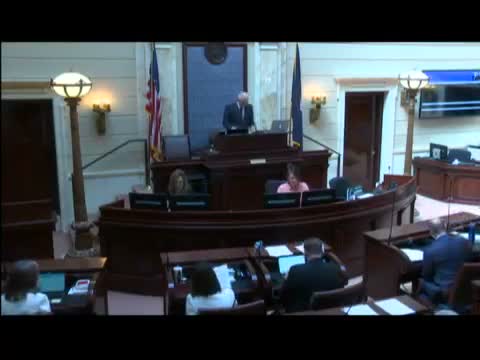
SALT LAKE CITY — The Utah State Senate convened in a ninth extraordinary session in June 2018 and approved a slate of gubernatorial appointments, including the confirmation of a nominee to the Third District Court.
The Senate received a proclamation from Governor Gary R. Herbert calling the session to consider appointments made since the close of the 2018 general session. The Senate first adopted the rules of the 2018 general session for use during the extraordinary session and then took up the governor's communications, including the nomination of Richard Mrowczyk to be a judge of the Third District Court.
Senator Todd Wyler told the chamber that the Senate Judicial Confirmation Committee interviewed the nominee, reviewed materials provided by the governor's office and voted 7–0 to recommend confirmation to the full Senate. Wyler asked the Senate to consent to the appointment.
During the roll-call debate, Senator DeBackus explained his intention to vote against confirmation and used his floor time to raise concerns about what he described as "a complacency in our judicial system" and a lack of demographic diversity on the district bench. DeBackus cited committee figures during his remarks, saying that between February 2015 and the present 29% of newly appointed district judges had been women, that in February 2018 only one of seven nominees (about 14%) was female, and that women comprise roughly 24.7% of the district court bench overall. He concluded by saying, "I am going to vote against this nominee and all others until we begin" to address selection and diversity issues.
The roll-call vote recorded 22 yeas, 1 nay (Senator DeBackus), and 6 absent. With the required consent achieved, the Senate confirmed Richard Mrowczyk as a judge of the Third District Court.
After the confirmation, the nominee addressed the Senate, thanked family and staff and pledged to the court and the people of Utah his best efforts, saying he would apply the law "faithfully and without bias."
The Senate also considered and consented to a second batch of gubernatorial appointments transmitted by the governor. The Secretary of the Senate read appointments to a variety of state boards and commissions, including the Utah Indigent Defense Commission (Amy Winder Newton replacing David Shawcroft; Nicole Cottle reappointed; Margaret Prim Lindsay reappointed; Mary Corcoran reappointed; Richard P. Morrow reappointed), the State Tax Commission (John L. Valentine), the Private Activity Bond Review Board (Wally Ritchie to replace Scott J. Bond; Steven R. Dawson to replace Wayne Parker), the State Board of Financial Institutions (Paul Atkinson to replace Dennis Hymas) and the Board of State History (Richard K. Talbot to replace Dan Methany). Confirmation committees reported favorable recommendations for many of those nominees.
A senator moved to dissolve the Committee of the Whole and the Senate proceeded to vote on the remaining appointees. Committee chairs present summarized their reviews and recommended consent. The clerk completed roll-call action on the remaining nominations and the chamber concluded its business. The Senate adjourned after a motion to adjourn was made.
What happens next: Confirmed nominees will assume duties according to their respective statutes and appointment procedures; the Senate's consent is the legislative approval required for these positions. The transcript record does not specify effective dates for each appointment.