Get Full Government Meeting Transcripts, Videos, & Alerts Forever!
Get email alerts on the Legislative Intervention topic
No spam. Unsubscribe anytime.
Utah Senate overrides governor to give legislature explicit right to intervene in state-court challenges
Summary
Senators voted to override the governor's veto of Senate Bill 171, granting the Legislature a statutory right to intervene in state-court cases that challenge the constitutionality or validity of laws. Debate centered on separation-of-powers, scope of "any action," and a $700,000 fiscal note to fund legal work.
The Utah Senate voted to override Governor Gary Herbert's veto of Senate Bill 171 on April 2018, a measure that gives the Legislature an explicit statutory right to intervene in state-court litigation that challenges the validity or constitutionality of laws.
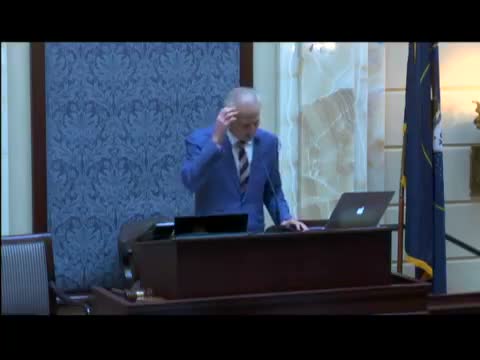
Senator Adams, sponsor of the bill, told colleagues the legislation "gives us that unconditional right to intervene into a case," distinguishing statutory intervention from filing an amicus brief. Adams said the bill is intended to ensure the Legislature's arguments are addressed in written court opinions and that the measure does not strip the attorney general of duties but adds the Legislature as an additional voice in litigation. He also noted a $700,000 fiscal note to provide capacity for legal work.
Opponents raised separation-of-powers concerns and questioned scope and implementation. One senator who identified themselves as opposing the measure warned it "would give us an unconditional right to intervene in any case in state court based on any law that we pass," and argued the language could reach routine matters such as tax disputes or child custody cases. Several senators urged clarifications to line 78–79 (the phrase "any action of the legislature") and asked for guardrails to limit the Legislature's role.
Senators also debated whether the statute would change intervention in federal courts; critics noted the bill would apply only to state courts and could encourage forum shopping. In response, Adams and supporters said the statute simply confers a right in state court and that courts retain the ultimate gatekeeping role; they pointed to court rule 24 and existing case law that governs intervention.
The motion to override was made on the floor and carried; the Senate recorded the override and transmitted the matter to the House for its consideration.
Next steps: The Senate sent the overridden bill to the House as required for final disposition and notified the lieutenant governor about the legislative action.