Get Full Government Meeting Transcripts, Videos, & Alerts Forever!
Get email alerts on the Real ID topic
No spam. Unsubscribe anytime.
Senate approves change to driver licenses to meet Real ID rules; sponsor says earlier action saves state money
Summary
Senators approved SB3002 to adopt the final step toward Real ID compliance on Utah driver licenses, a move the sponsor said will save the state money and ease traveler access to federal facilities; the vote was 25-0 with four absent and the bill was sent to the House.
The Utah State Senate passed Senate Bill 3002 in a special session to implement changes to state driver licenses to meet federal Real ID requirements. The clerk announced the vote as 25 yea, 0 nay, 4 absent; the bill will be transmitted to the House for its action.
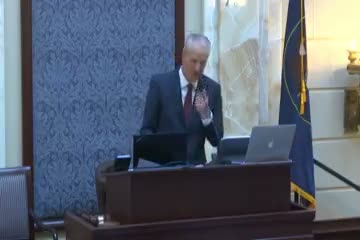
Sponsor Senator Harper said Utah already meets the documentation requirements that support Real ID compliance and that SB3002 implements the remaining administrative step — a marking (often described as a small star or emblem) that indicates full compliance. “The only thing we're not compliant with is putting that little gold star on the license,” Harper said. He argued accelerating the change now would save the state money and make it simpler for residents to access federal facilities and board aircraft without extra procedures.
Harper told the Senate that accelerating the transition would cost the state some money upfront but would save approximately $80,000 per month during the accelerated rollout and “save the state nearly half a million dollars” compared with delaying implementation into the next general session.
The bill’s sponsor said the draft had been reviewed by the relevant interim committee (transportation) and had passed that committee unanimously in November before being brought to the special session for final action.
The Senate suspended the constitutional three-reading rule under a formal motion and read SB3002 for first, second and third times under suspension before voting. The bill passed and was sent to the House. Absent senators were noted in the roll call; the clerk announced several senators excused from that day’s session.