Get Full Government Meeting Transcripts, Videos, & Alerts Forever!
Get email alerts on the Taxes Sales And Use topic
No spam. Unsubscribe anytime.
Senate approves online sales tax changes to conform with Wayfair, repeals vendor rebate and lockbox provision
Summary
Senators passed amendments to Utah law aligning state sales tax rules with the U.S. Supreme Court’s Wayfair decision, setting thresholds for remote sellers, ending an 18% vendor compensation rebate and repealing a previously established lockbox tied to a $55 million trigger; sponsors said changes preserve tax neutrality while opponents urged caution about funding priorities.
The Utah Senate voted this special session to advance changes to state sales and use tax law to conform to the U.S. Supreme Court’s June 2018 decision in South Dakota v. Wayfair, which allows states to require many remote sellers to collect sales tax.
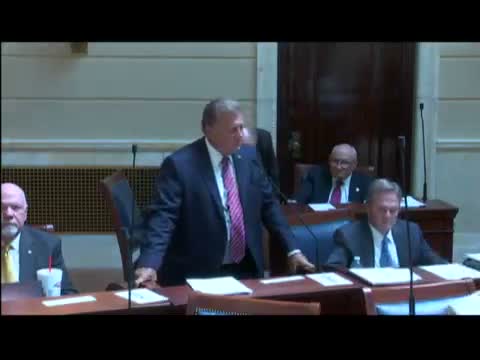
Senator Allen Bramble, sponsor of SB2001, told the chamber the bill codifies the de minimis thresholds used in South Dakota — $100,000 in annual sales into Utah or 200 transactions a year — and ends the 18 percent vendor compensation payment that had been provided to vendors who voluntarily collected Utah sales taxes. Bramble said the bill also sets the effective date so mandatory collection and the expiration of the vendor compensation occur the same day, and it triggers a three‑year sales tax exemption for certain machinery and equipment on Jan. 1 to match prior legislative intent.
The bill also repeals the administrative “lockbox” mechanism that had been written to hold $55,000,000 in remote‑sales revenue until an exemption was triggered. Senator Lyle Hilliard asked whether revenues above that cap would remain in the general fund; Bramble said fiscal staff advised that voluntary remittances already put substantial money into the general fund and that repeal would allow the regular appropriations process to allocate the new revenue.
Opponents worried about priorities. Senator Davis argued that the measure would divert roughly $60 million in state and $20 million in local funds to tax preferences for a small group of manufacturers and urged the chamber to reject the bill, saying the state should prioritize education funding. Bramble and other supporters disputed the arithmetic during floor debate, saying the price tag tied to the original exemption was $55 million and that the bill instead codifies prior decisions and places new revenue into the general fund to be appropriated.
Senator Jerry Stevenson and other backers cast the vote as a fairness measure that levels the playing field between online retailers and brick‑and‑mortar stores and said modern tax‑compliance software reduces the compliance burden on remote sellers. Bramble and supporters also said tax reductions tied to the change were intended to mitigate the effect of federal tax reform.
The Senate moved the bill under suspension of the rules and sent it for further action; the House later transmitted that it had passed the Senate bill as well. The bill text and fiscal estimates presented during debate specify the threshold, the sunset of vendor compensation and the $55 million lockbox figure cited by sponsors and fiscal staff.