Get Full Government Meeting Transcripts, Videos, & Alerts Forever!
Get email alerts on the Elections topic
No spam. Unsubscribe anytime.
Utah Senate votes to move presidential primary to Super Tuesday; fiscal note estimated at $3 million
Summary
The Utah Senate approved legislation to hold a presidential primary on Super Tuesday (March 3), a bipartisan measure the sponsor said will cost about $3 million; the bill passed under suspension and will go to the House for consideration.
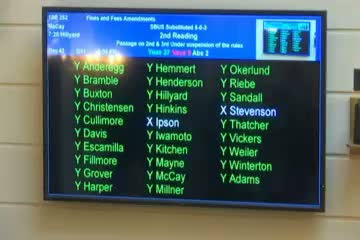
The Utah Senate passed first substitute Senate Bill 242 on a 25-2 vote, changing the state's presidential nominating date to Super Tuesday, March 3, and aligning Utah with 10 other states.
Senator Curtis Bramble, sponsor of the bill, said the measure "creates a presidential primary on what's called Super Tuesday. It'd be, March 3," and described the change as cleaning up code language and placing Utah in a larger primary calendar. Bramble said the bill has bipartisan backing and was developed with chairs of both parties after difficulties with caucuses in prior cycles.
Supporters said a primary would broaden voter participation compared with caucuses. Senator Kitchen expressed support based on prior caucus experience. Senator Hilliard asked how the state would fund the primary; Bramble cited a fiscal note "roughly $3,000,000" and told members that an appropriation would be required to implement it.
Opponents recorded two no votes on final passage but did not block the motion to pass under suspension of rules. The Senate's roll call recorded 25 yea votes, 2 nay votes and 2 members absent. Under Senate procedure the passed bill will be transmitted to the House for further consideration.
The fiscal note will be part of subsequent budget deliberations; the sponsor and other lawmakers acknowledged that the Legislature must identify or appropriate the amount to cover administration, ballots and other primary-related costs.
The Senate's action sends SB 242 to the House; if approved there the measure would change Utah's role in the presidential nominating calendar and require the appropriation identified in the fiscal note.