Get Full Government Meeting Transcripts, Videos, & Alerts Forever!
Get email alerts on the Legislative Session Roundup topic
No spam. Unsubscribe anytime.
Utah Senate advances broad package of bills, sending measures on farming, health, education and transportation to the House
Summary
On March 11, 2019, the Utah State Senate passed a series of bills covering urban farming, prior-authorization for medical treatment, fiduciary rules, historic-preservation building code, supplemental appropriations and a transportation bond; most measures passed by wide margins and were sent to the House for consideration.
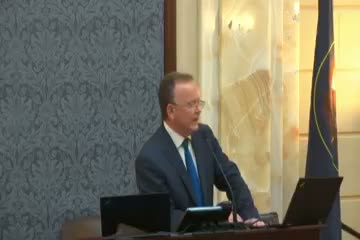
SALT LAKE CITY — The Utah State Senate spent most of its March 11, 2019, session moving a long second-reading calendar, passing a series of substantive bills and sending them to the Utah House.
Among the measures the Senate approved were a first substitute to the Urban Farming Assessment Act (First Substitute SB 246), a consensus substitute to medical-treatment prior-authorization rules (First Substitute SB 264), changes to the Uniform Fiduciary Income and Principal Act (SB 254), amendments to the construction code to protect historic plaster work (SB 253), the supplemental appropriations bill (SB 2), and a transportation infrastructure bond authorization (SB 268). Sponsors described the votes as efforts to streamline administrative processes, protect historic materials, fund priorities in public education and accelerate transportation projects.
Sponsor comments and sponsor-supplied amendments framed much of the debate. The sponsor of the urban-farming bill explained that an adopted amendment reduced an acreage threshold from two acres to one and added language permitting production "for food or marketable crop." The medical-authorization substitute drew its support from discussions with medical organizations, insurers and pharmacy stakeholders; the sponsor said the effort is intended to "streamline some processes" in prior authorization for procedures and medications.
Lawmakers debated timing and implementation in several instances. Senator Hilliard moved an amendment to SB 254 to delay its effective date from July 2019 to July 2020 so probate practitioners and the probate section of the bar could review implementation; the amendment passed on the floor and the bill passed by roll call. On SB 253, Senator Davis said the amendment and bill were designed to preserve artisanship — "plaster is one of those real fundamental pieces that really can't be copied" — and to apply Secretary of the Interior standards where feasible.
Fiscal and infrastructure measures drew lengthier discussion. The supplemental appropriations bill (SB 2) was presented as additions to FY2019 and FY2020 appropriations and passed unanimously on the floor. The public education adjustments bill (SB 4) included multiple education funding items the sponsor highlighted on the floor: approximately $1 million for the Beverly Taylor Sorensen Art Learning Program; $4 million for charter school local replacement funding; roughly $35 million for enrollment growth; a 4% increase in the weighted pupil unit (about $128 million as reported on the floor); $2.5 million for student transportation; $15 million for the Teacher Student Success Act; and $2 million for competency-based education. Those figures were reported by the sponsor during floor remarks.
Transportation bonding (SB 268) produced the most extended debate. The sponsor characterized the proposal as authorizing new bonding capacity (up to $1.6 billion in new authorization as described on the floor) while remaining under the state's constitutional bonding limits. Supporters said issuing bonds now would accelerate project design and construction and maintain a consistent pipeline of work; opponents warned about debt levels, rising construction costs and the merits of pay-as-you-go. Senators asked how much of the bond proceeds would support mass-transit projects and whether the usual appropriations committee processes had been followed; the sponsor and other senators said much of the programming is done by UDOT and that some transit projects are included, but exact percentages were not provided on the floor.
Votes at a glance
- First Substitute SB 246 (Urban Farming Assessment Act Amendments): Passed 26–0, 3 absent. Sponsor moved amendment reducing acreage threshold and clarifying permitted production. - First Substitute SB 264 (Medical Treatment Authorization Amendments): Passed 26–2, 3 absent. Sponsor said stakeholders (medical associations, insurers, PBMs) sought streamlining for prior authorization. - SB 254 (Uniform Fiduciary Income and Principal Act): Amendment to delay effective date adopted; bill passed 26–0, 3 absent. - SB 253 (Construction Code for Historic Preservation): Amendment adopted to constrain application where public funds or public ownership are involved; passed 28–0, 1 absent. - SB 236 (State Board of Education candidacy amendments): Passed 23–5, 1 absent after questions about pending court review. - First Substitute SB 8 (State agency fees and internal service fund rates): Passed 28–0, 1 absent (technical corrections tied to the budget). - SB 2 (Supplemental appropriations): Passed 29–0, 0 absent (floor summary cited approximately $196 million and $768 million in appropriations items for two fiscal years during remarks). - SB 4 (Public education budget adjustments): Passed 29–0, 0 absent (sponsor listed multiple funding items during remarks; amounts reported on the floor are approximate where the record was garbled). - First Substitute SB 214 (Property tax relief modification; water-district data collection): Passed 29–0, 0 absent. - First Substitute SB 248 (Throughput infrastructure amendments): Passed 21–6, 2 absent (technical amendment adopted; sponsor described interagency administration for throughput projects). - SB 268 (Transportation infrastructure bond amendments): Passed 24–4, 1 absent (sponsor described bonding authority and constraints; debate focused on timing, inflation and project prioritization).
What comes next
Most bills passed on the Senate floor were ordered transmitted to the House for consideration. Several items that were "circled" on the calendar were held for further consideration by the body. The Senate recessed following a motion to take a short break.
Reporting notes
Quotes and floor descriptions in this report are drawn from the Senate transcript. Where the transcript presented inconsistent name spellings or garbled numeric values, the article avoids inventing details and uses sponsors' floor descriptions or reports amounts as approximate.