Get Full Government Meeting Transcripts, Videos, & Alerts Forever!
Get email alerts on the Higher Education Free Speech topic
No spam. Unsubscribe anytime.
Senate rejects bill to impose "Davis" free‑speech standard on public colleges
Summary
The Utah Senate voted to reject first substitute House Bill 158, which would have required public higher‑education institutions to adopt the Davis v. Monroe County standard for disciplining student speech. Proponents said the change would protect expressive activity; opponents raised liability and immunity concerns. The bill failed on a roll call.
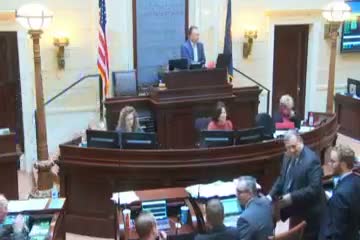
The Utah Senate on March 13 rejected first substitute House Bill 158, a measure that would have required public colleges and universities to apply the U.S. Supreme Court’s Davis v. Monroe County standard when deciding whether student expression crosses the line into punishable harassment.
Sponsor Sen. Mark Weiler argued the bill would ‘‘recognize the Davis standard, [and] prohibit public educational institutions from taking adverse actions against students for free expression, while ensuring students do not experience harassment.’’ He told colleagues the measure would restore a higher threshold for sanctioning campus speech and said the House sponsor reported 11 other states had adopted the standard.
Opponents pressed concerns about unintended legal and fiscal consequences. Sen. Hilliard said he had read the bill and that ‘‘it scares me,’’ pointing to language that would allow prevailing plaintiffs to recover at least $1,000 plus attorney fees and to a provision waiving certain state‑immunity protections. Other senators warned the change could invite litigation against institutions and risk large defense costs. Sen. Kitchen said he was ‘‘opposed’’ because he worried the bill could handcuff institutions’ ability to address harassment and make campuses less safe.
Senators also debated whether the bill’s aim — to curb what sponsors described as overly broad campus rules that discipline students for ‘‘insults’’ and similar conduct — would be better addressed through administrative policy changes or additional legislative safeguards. The sponsor said the bill was intended to be student‑to‑student in scope and noted that if universities adopted the higher Davis standard they would reduce their exposure to suits.
On a roll call the measure failed, with eight senators voting aye and 19 voting no. Because the bill failed under suspension of the rules, it will be sent to staff for filing and is not advancing from this floor action.
What’s next: The sponsor said the bill’s first report or implementation steps would be administrative if pursued further, but with the failed floor vote the measure does not advance from the Senate at this time.