Get Full Government Meeting Transcripts, Videos, & Alerts Forever!
Get email alerts on the Criminal Justice topic
No spam. Unsubscribe anytime.
Senate debates bill to expand juvenile sex-offender registry; sponsors and critics clash
Summary
Senators debated House Bill 75, which would expand registration requirements so certain cases involving 14- and 15-year-old victims and an offender more than four years older trigger registry placement; supporters called it a corrective, victim-focused change while opponents said it removes prosecutorial discretion and could punish near-age teens.
The Utah Senate spent an extended period debating House Bill 75, a measure the floor sponsor said would close what he described as an unintended gap so that unlawful sexual-contact cases involving 14- and 15-year-old victims and more-than-four-year age differences would result in placement on the sex-offender registry.
"This bill came out of a case of a 40 year old man that engaged in unlawful ... activity with a minor," Senate sponsor Escamilla said, arguing the bill specifically targets situations where a significantly older person engages in unlawful contact with a 14- or 15-year-old and that the change restores the original intent of the law.
Opponents, including Senator Weiler, urged rejection. "This bill will mandate that that 19 year old boy is listed as a ... offender for the next 10 years of his life," Weiler said, warning the measure would require registration even when prosecutors reduce charges to misdemeanors to reflect case circumstances and could ensnare near-age teenagers who were previously addressed by prosecutorial plea bargaining. He added that mandating registration in those misdemeanor outcomes "removes tools from prosecutors and mandates a certain result regardless of the outcome."
Other senators raised practical and policy concerns: that the bill eliminates discretion used by county attorneys to resolve certain close-in-age cases and could produce harsh lifetime consequences for young people. Supporters said the change would better protect victims and align statutory consequences with legislative intent.
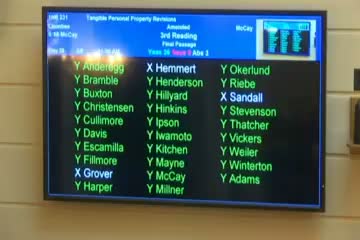
After debate and offers to prepare substitute language, the Senate voted to "circle" the bill — a procedural action to set the measure aside for further work — rather than pass it. The motion to circle passed without recorded opposition on the floor at that time.
The next steps were to refine the proposal and return it for further consideration; the Senate did not take a final passage vote on the substantive substitute in this session segment.