Get Full Government Meeting Transcripts, Videos, & Alerts Forever!
Get email alerts on the Criminal Justice topic
No spam. Unsubscribe anytime.
Senate approves tougher penalties for targeted offenses after contentious floor debate
Summary
Fourth substitute Senate Bill 103, which enhances penalties for crimes that target victims based on protected characteristics, passed on a roll call after an extended, at-time contentious debate and a call of the Senate; sponsors stressed the bill punishes conduct not speech.
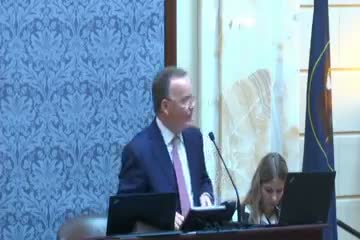
The Senate approved a fourth substitute to Senate Bill 103, described by its sponsor as a measure to enhance penalties for crimes that target victims based on certain characteristics. Floor debate was robust and, at one point, the sponsor requested a call of the Senate to ensure full attendance before the final vote.
Senator Daniel Thatcher, the bill’s sponsor on the floor, framed the legislation as limited to conduct: “It punishes only conduct,” he said, adding that enhanced penalties apply when conduct demonstrates heightened purpose to harm certain victims. Thatcher said the bill does not punish thoughts or feelings and invoked legal precedent to underscore that conduct is not protected speech.
Several senators expressed reservations about categories included in the enhancements and whether the statute should be broader or narrower. Senator Okerlund asked to explain his vote and said he was voting "I" (nay) while flagging other classes that might merit protection in future discussion, citing teachers and other groups. After roll call, the transcript records the substitute passing 18 yeas and 11 nays; the measure will be sent to the House for consideration.
What’s next: The bill will be transmitted to the House. Sponsors indicated discussions about whether additional classes should be considered in future sessions.