Get Full Government Meeting Transcripts, Videos, & Alerts Forever!
Get email alerts on the Water And Land Use topic
No spam. Unsubscribe anytime.
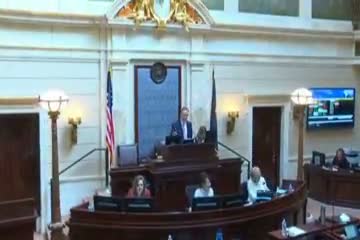
Senate approves bill letting Utah’s smallest counties extend water studies before land-use approvals
Summary
Senate Bill 189 — allowing fifth- and sixth-class counties up to two additional six-month study periods (maximum 18 months) to assess water availability before approving development — passed after discussion about scope and whether state authorities already have such powers.
Senators passed Senate Bill 189 on a roll call after extended discussion about whether the measure simply duplicates existing state authority or fills a gap for the state’s smallest counties.
Sponsor Senator Ralph Okerlund said the bill gives the smallest counties “the ability to have an additional 2 6 month periods to be able to complete a study, to do…to understand what their water resources are” and stressed that many of these counties lack in-house engineers or legal staff to conduct such studies. He told colleagues the Division of Water Rights is conducting a related study “that…may take about a year and a half” to complete, and that the bill would empower local bodies to extend moratoria while they obtain needed data.
Opponents and questioners pressed the bill’s scope. Senator Henderson said she had “a constituent…concerned about a development near Bryce Canyon” and asked whether the Division of Water Rights can already impose moratoria; Senator Okerlund responded that the state engineer is conducting studies but that the bill is targeted at counties with the least resources to complete timely studies. Senator Wyler said constituents suggested the bill “is basically designed to restrict developers in the whole state” and warned against creating isolated precedents for only a few counties.
The bill’s core change allows counties classified as fifth or sixth class to extend the standard six-month moratorium by up to two additional six-month periods — a maximum of 18 months — to complete water-rights, water-quality or resource-availability studies before permitting large developments. Sponsors framed the change as a limited, resource-driven accommodation for very small counties such as Garfield, Wayne and Daggett, where seasonal tourism and rapid growth can strain local knowledge of water resources.
The Senate adopted the bill on a roll call vote recorded in the floor transcript as 16 yeas, 12 nays and 1 absent. The measure will go to the House for further consideration.
What’s next: The bill will be transmitted to the House for their consideration; sponsors noted the Division of Water Rights’ ongoing study may inform implementation details and urged coordination between county officials and state agencies.