Get Full Government Meeting Transcripts, Videos, & Alerts Forever!
Get email alerts on the Education Special Needs topic
No spam. Unsubscribe anytime.
Senate approves tax-credit funded scholarship for students with disabilities after heated debate
Summary
The Utah Senate narrowly approved SB 177, a special-needs scholarship financed by a capped corporate tax-credit program intended to expand options for students with disabilities; supporters called it a targeted tool for families, while opponents warned of limited guardrails and up to $12 million in foregone revenue.
The Utah Senate passed Senate Bill 177 on the floor after an extended debate over accountability and cost, sending the measure to the House for consideration. The bill establishes a corporate tax-credit-funded scholarship program intended to expand and sustain scholarships for students with disabilities and is capped at $12 million in tax credits in its initial year.
Supporters, led by sponsor Senator Fillmore, said the program is designed to preserve and grow an existing scholarship model and to provide parents more options for children with specialized needs. "How can we best fit the needs of this specific child?" Fillmore asked on the floor, arguing the scholarship is another tool to tailor education to individual students rather than the system as a whole.
Opponents raised multiple concerns during floor debate. Senator Reby (voting no) said the bill "does not provide the safety mechanisms for our children to get the best education they can," citing a lack of guardrails and oversight. Senators questioned whether the measure would reduce federal matching funds tied to Individualized Education Programs, whether private-school assessments would be comparable to public metrics, and how scholarship-granting organizations would be selected and monitored. The fiscal note referenced in debate estimated a potential reduction in state revenue capped at $12,000,000 in the program's first year, a focal point for critics who warned the policy could divert funds from public schools.
Sponsor Fillmore responded to fiscal and accountability questions by describing administrative and assessment provisions copied from the existing Carson Smith scholarship program and saying the State Board of Education will adopt rules to administer eligibility and oversight. He told colleagues that the bill requires scholarship administrators to follow eligibility processes and that the per-student state funding mechanism would leave some funds in the public system even when a child accepts a scholarship.
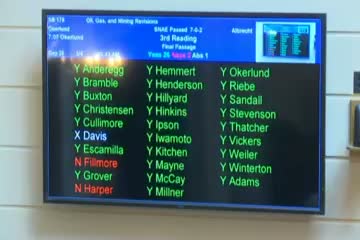
After multiple rounds of questioning on definitions (including whether eligibility requires an IEP or a multidisciplinary evaluation), reporting and administrative costs, and program caps, the Senate voted to approve SB 177. The final roll call recorded the bill as passing this body and being sent to the House.