Get Full Government Meeting Transcripts, Videos, & Alerts Forever!
Get email alerts on the Education Scholarships topic
No spam. Unsubscribe anytime.
Senate advances tax-credit scholarship for students with disabilities after floor debate
Summary
Senators advanced a proposal creating a tax-credit-funded scholarship for students with disabilities, capped at $12 million in year one, after extended floor questioning about oversight, eligibility and accountability. Sponsor Senator Fillmore said schools would administer annual norm‑referenced tests; critics warned of private-school pitfalls.
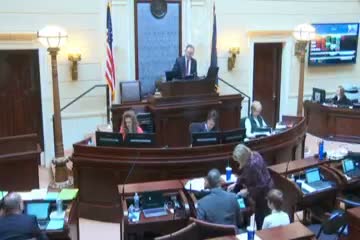
SALT LAKE CITY — The Utah Senate moved a bill to create a new tax-credit-funded scholarship program for students with disabilities to the third‑reading calendar on March 1, 2019, after an extended floor debate over eligibility, oversight and fiscal effects.
Senator Lincoln Fillmore, the bill’s sponsor, said the program would let corporations reduce tax liability by donating to scholarship organizations instead of paying a $3,400 tax amount, with the program capped at $12,000,000 in its first year. "That fiscal note comes from the fact that this is capped at $12,000,000 in its first year," Fillmore said on the floor, explaining the revenue impact on the state.
Supporters described the proposal as a parallel mechanism to the existing Carson Smith scholarship that would follow the funding for an eligible child to a private or public school. Fillmore told colleagues the scholarship would equal the state's weighted pupil unit amount used for students with disabilities — one WPU for students without an IEP and two WPUs for those with an IEP — and that participating private schools must administer a nationally norm‑referenced assessment each year as a condition of participation.
Opponents warned the bill could open the door to predatory practices by private providers and reduce transparency. Senator Escamilla pressed the sponsor on oversight and noted concerns that many eligible students may not have an individualized education program, saying the lack of an IEP "provides an oversight and opportunity" normally supplied by the public‑school process and expressing worry about private, for‑profit schools targeting funds. Senator Eby asked how the state would measure student progress without IEPs; Fillmore reiterated the testing requirement and said the parent retains responsibility for seeking individualized accountability from private schools.
Senator Hilliard questioned the size and legal basis of the program’s fiscal cap and argued that a figure such as $12 million warranted fuller interim study. Fillmore said the cap reflects an upfront tax‑credit limit and that the fiscal note shows a reduction in state revenue because donations to scholarship organizations would replace state tax receipts.
The Senate voted to read SB 177 for a third time; the clerk recorded 17 ayes and 12 nays. The move advances the bill but is not the final passage of the program; the bill will face a third‑reading vote and further consideration before becoming law.
What’s next: SB 177 was ordered to the third‑reading calendar; any additional amendments or a final passage vote will occur when the Senate considers third‑reading items.