Get Full Government Meeting Transcripts, Videos, & Alerts Forever!
Get email alerts on the Medicaid Expansion topic
No spam. Unsubscribe anytime.
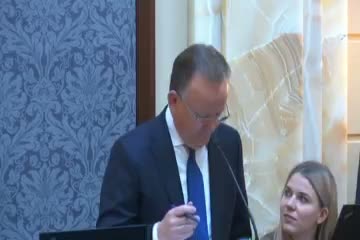
Senate concurs with House substitute to adjust Medicaid expansion; 4th-substitute SB 96 passes 22-7
Summary
After hours of debate over waivers, caps and funding, the Utah Senate voted 22-7 to concur with the House substitute to fourth‑substitute Senate Bill 96, a package of Medicaid expansion adjustments that relies on federal waivers, state revenue and a hospital assessment; the bill will be referred to the House.
SALT LAKE CITY — The Utah Senate voted 22-7 to concur with a House substitute to fourth‑substitute Senate Bill 96, a package of Medicaid expansion adjustments that sponsors said balances fiscal constraints and the intent of Proposition 3.
Senator Christiansen, sponsor of the substitute, told colleagues the House changes addressed many concerns and moved the Senate to concur. He said the package includes contingency plans tied to federal waivers and state funding. "We are putting we are putting ongoing money from the sales tax, obviously. And then we also have an ongoing $15,000,000 appropriation through the with the hospitals," Christiansen said on the floor.
Why it matters: the substitute alters how Utah phases and funds expanded coverage for adults in the Medicaid gap. It relies on a mix of waiver authorities and state sources and includes fallback rules if higher‑match waivers are not approved — an outcome that would shift timing or scope of the program.
Key debate and claims
Senator Davis pressed the sponsor to enumerate new waivers and to explain fallback options if the state does not secure federal approvals. "So the fallback is to give the people what they voted for, which is full Medicaid expansion if we don't get the waivers?" Davis asked. Christiansen replied that three waivers were on the table — two 70/30 options with caps and a 90/10 option the sponsor hoped to secure — and that the state would remain funded in the near term if waivers did not arrive by January 1.
Senator Bramble challenged the characterization that the substitute was not an expansion, saying the substitute would add roughly $87,000,000 in spending and therefore amounted to an expansion of coverage. "That's what this bill does. And it does it to the tune of $87,000,000 additional dollars being spent on Medicaid coverage should this bill pass," Bramble said.
Senator Hamrick, speaking for supporters of concurrence, said the plan is a compromise that incorporates cost‑saving changes and provides a fallback so the state can implement coverage increases responsibly. He said the expectation was to expand coverage to 100% of the federal poverty level on April 1 and that a higher‑match waiver would make the program sustainable long term.
Senator Escamilla opposed concurrence, saying the substitute still left some people with marketplace costs and therefore did not fully deliver the coverage that voters approved under Proposition 3. "The problem with this legislation ... is that we don't have ... full coverage all the way to 138%. Why are we waiting? Why can't we just go first? Give them the coverage that the people of Utah voted for," she said.
Other concerns raised on the floor included state liability under per‑capita caps if enrollment exceeded expectations, and whether cost‑of‑living adjustment (COLA) assumptions underlying the fiscal estimates had been adequately studied.
Vote and next steps
After a brief call of the Senate to secure attendance, the body voted to concur with the House substitute. Fourth‑substitute SB 96 passed the Senate on a 22‑7 roll call and will be transmitted to the Utah House for further action.
What remains unresolved: the bill's ultimate costs and long‑term structure depend on whether federal waivers (including higher‑match options) are approved and on forthcoming fiscal analyses of COLA and enrollment dynamics. Advocates and critics on the floor agreed the substitute achieves elements of Prop 3 but differs from the full expansion some supporters sought.
The Senate's concurrence sends the substitute back to the House, which will consider the Senate action and any further amendments or approvals.