Get Full Government Meeting Transcripts, Videos, & Alerts Forever!
Get email alerts on the Public Safety Retirement topic
No spam. Unsubscribe anytime.
Senate advances bill to boost Tier 2 retirement benefits for public safety employees
Summary
Senate Bill 129 would raise retirement multipliers for Tier 2 public-safety employees, create dedicated funding from insurance premium and liquor proceeds growth, and allow a phased local employer contribution increase; sponsors say one-time and ongoing funds will cover transition costs and improve recruitment.
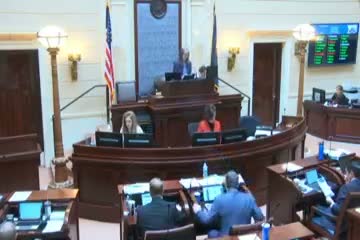
The Utah Senate moved forward legislation aimed at increasing retirement benefits for public-safety and firefighter employees under the Tier 2 system.
Senate Bill 129, sponsored by Senator Harper, would raise the service multiplier used to calculate retirement benefits for Tier 2 public-safety employees, create a dedicated funding stream drawn from growth in the insurance premium tax and liquor proceeds, and provide a transition window for local employers. In floor remarks Senator Harper said the bill shifts the multiplier from the prior level and supplies both one-time and ongoing funds to address the cost without creating a deficit.
"This bill goes through and does a couple things. It goes through and changes the multiplier from 1 and a half percent to 2%. It creates a dedicated funding stream from part of the insurance premium tax and from the liquor proceeds... and then it goes through and allows locals to choose to go from 12% to 16% as they fund retirement in the future," Harper said.
Harper told the Senate the proposal includes a $5.3 million one-time allocation to cover transition costs and an ongoing $3 million to support benefits going forward; he said roughly $1.4 million of the ongoing amount would cover state employees and the remainder would phase in to allow cities and counties to adjust budgets over several years.
Senators pressed several fiscal and policy questions. Senator Hilliard asked whether the funding relied on growth revenues and whether the plan remained contributory or shifted toward defined benefits; Harper said the added funding is expected to come from revenue growth and that the system remains a contributory Tier 2 plan, with employer contribution caps that could increase from 12% to 16% and employees potentially covering costs above that cap in the future.
Other senators expressed caution about long-term cost shifting to local governments. Senator Fillmore said he supported parts of the bill but warned that shifting retirement costs to future taxpayers merited fuller debate. Senator Bramble and others discussed using future growth in premium-tax revenue as a funding mechanism.
After extended floor debate, the Senate recorded 25 yea votes, 3 nay votes and 1 absent and read the bill for a third time; the bill will proceed in the legislative process for further consideration.