Lifetime Citizen Portal Access — AI Briefings, Alerts & Unlimited Follows
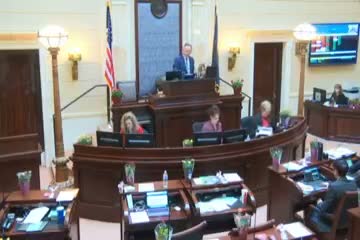
Utah Senate clears package of bills, including optional electronic driver's license
Loading...
Summary
The Utah Senate on Feb. 14 approved a range of measures on concurrence, consent and third-reading calendars, including a first-substitute bill creating an optional electronic driver's license (SB100) and amendments to support-animal rules (HB43); most measures passed unanimously or with large majorities.
The Utah Senate on Feb. 14 passed a slate of bills and a concurrent resolution, moving multiple measures to the House for further action or to be signed.
The most visible vote came on first substitute Senate Bill 100, an option that would let Utahns carry an electronic copy of their driver's license on a smartphone. Senator Fillmore, sponsor of the substitute amendment adding an appropriation for the fiscal note, said the app-based license would be optional and ‘‘would not replace a standard driver's license for anyone’’ when asked about airport/TSA use. The Senate approved the first substitute of SB100 by a recorded vote of 29 yeas, 0 nays.
Several other measures were approved on the concurrence and third-reading calendars. Senator Milner moved passage of second substitute Senate Bill 14 (education reporting requirements); the measure passed 26-0 with three absent. First substitute Senate Bill 15 (education recodification) passed 28-0 with one absent after senators said the staff-level revisions were technical. First substitute Senate Bill 25 (records committees) passed 26-0 with three absent, and first substitute Senate Bill 82 (dealer licensing amendments) passed 27-0 with two absent.
On the consent and third-reading calendars, the Senate approved a range of House bills and a concurrent resolution. Senator Bramble summarized House Bill 43 as narrowing the statutory definition of a support animal so it applies only to animals ‘‘specifically associated with a federally designated disability,’’ saying the change aims to reduce what he characterized as abuse of emotional-animal claims; the Senate passed the measure 29-0. Senator Vickers presented House Concurrent Resolution 1 urging the U.S. Drug Enforcement Administration to allow a pharmacy drop-box pilot for pharmaceutical take-backs; the resolution passed 29-0.
Senator Vickers also guided House Bill 249, a bundle of reviser's technical corrections to the Utah Code, through final passage (28 yeas, 0 nays, 1 absent). Other House bills that passed included HB24 (property tax exemptions/deferrals and abatements), HB25 (Tax Commission amendments), HB18 (Massage Therapy Practice Act exemptions), HB95 (returned-check fee amendments) and HB159 (CPA exam amendment), each carried with broad support.
Several senators used personal-privilege time to recognize students, nonprofit leaders and other visitors in the gallery. Senator Iwamoto noted the eleventh annual Nonprofit Day on the Hill and cited membership and revenue figures for the nonprofit sector in Utah.
What happens next: Measures that passed the Senate on concurrence or final reading will be transmitted to the House as required (or, for House-origin bills, returned to the House and processed for enrollment/signature). The Senate recessed until 2 p.m. following the votes.
Quotes from the floor: Senator Fillmore, discussing electronic licenses: "This would not replace a standard driver's license for anyone." Senator Bramble, on support-animal changes: "This bill addresses that problem and gets rid of the abuse that we're seeing particularly in the emotional animal arena."