Get Full Government Meeting Transcripts, Videos, & Alerts Forever!
Get email alerts on the Mental Health Policy topic
No spam. Unsubscribe anytime.
Senate advances assisted outpatient mental-health bill amid funding questions
Summary
SB 39, which would create an assisted outpatient treatment pathway for people with severe mental illness, was advanced to third reading after sponsor remarks and a floor exchange about fiscal impacts on county mental health authorities; the floor recorded broad support but senators requested consultation with local health departments.
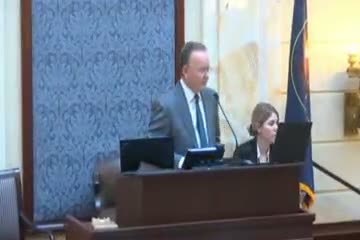
The Utah Senate on the floor advanced SB 39, Assisted Outpatient Treatment for Mental Illness, to third reading after sponsor Sen. Daniel Fillmore described the measure as an early-intervention 'off-ramp' intended to help people with severe mental illness before they are civilly committed or enter the criminal justice system.
Fillmore said the bill creates a 'need for treatment' standard and outlines procedures family members, courts and county mental health departments would follow. He said similar statutes exist in 36 other states and that the program is intended to allow county mental health authorities to provide outpatient treatment when a person lacks the capacity to engage voluntarily.
Sen. Luz Escamilla questioned how the fiscal note would be paid and whether counties would view the measure as an unfunded mandate. Fillmore said administrative court costs are small but that county mental health authorities would provide most services; the transcript shows an estimated statewide cost to county mental health authorities of about $300,000 drawn from existing appropriations and local taxing authority. The sponsor said Medicaid expansion legislation under consideration would provide additional resources, and that local authorities engaged during interim committee work had not formally objected.
Escamilla requested the bill be placed on third reading so senators could check with local health departments; the sponsor complied and moved the bill to a third-reading call. The Senate recorded the motion to read the bill a third time; President Adams announced later that the bill had 28 yea votes, 0 nay and 1 absent for the prior procedural step moving it forward to third reading.
Fillmore said the approach is aimed at preventing more severe outcomes — incarceration or civil commitment — by allowing earlier treatment when necessary. The bill will appear on the third-reading calendar, where further debate and a final vote will be taken.