Get Full Government Meeting Transcripts, Videos, & Alerts Forever!
Get email alerts on the Banking Tax Policy topic
No spam. Unsubscribe anytime.
Utah Senate restores state tax deduction for FDIC insurance premiums, 28-0
Summary
The Utah Senate passed SB 12 on third reading to restore a state subtraction for FDIC deposit-insurance premiums removed by federal tax changes, citing competitiveness for Utah banks and an estimated $2 million fiscal effect already accounted for in the special-session budget.
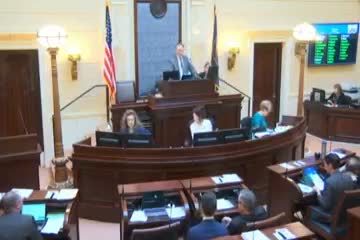
The Utah Senate on the floor passed SB 12, FDIC Premium Deduction Amendments, on third reading and sent the bill to the House after a 28–0 recorded vote with one senator absent. Sponsor Sen. Curt Stevenson said the bill restores a state tax subtraction for FDIC insurance premiums that Congress narrowed in its federal tax reform, returning affected banks to their pre-02/2018 state-tax treatment.
Stevenson said the change is intended to keep Utah competitive as a banking hub and restore parity with other business expense deductions. He told colleagues the fiscal impact — primarily income-tax revenue that would otherwise flow into the Uniform School Fund — totals about $2,000,000 and that the amount was already addressed in the legislature’s June special-session budget, meaning enactment will require offsetting budget adjustments.
The floor vote included public disclosures from members who said they work for financial institutions that could benefit. One senator said he works for a bank that could materially benefit and recorded an affirmative vote. Sen. Luz Escamilla also disclosed she works for a financial institution that will be impacted and voted aye.
Stevenson said, “This restores us back to 02/18 before the tax changes were made,” framing the measure as restoring prior state law for affected banks. President Adams announced the bill’s passage and transmission to the House for further consideration.
The bill now proceeds to the House, where its fiscal impacts and companion measures will be considered.