Get Full Government Meeting Transcripts, Videos, & Alerts Forever!
Get email alerts on the School Vaping Policy topic
No spam. Unsubscribe anytime.
Senate approves bill expanding school authority over vaping devices, adds prevention measures
Summary
The Utah Senate passed House Bill 58, which requires local education agencies to adopt policies to seize and destroy electronic cigarette devices and adds prevention and curriculum requirements; sponsors and opponents debated law‑enforcement involvement and risks of criminalizing students.
The Utah Senate on the floor approved House Bill 58 on final passage, a measure that requires local education agencies to adopt policies to seize and destroy electronic cigarette devices found on campus and expands prevention and education programs to address youth vaping.
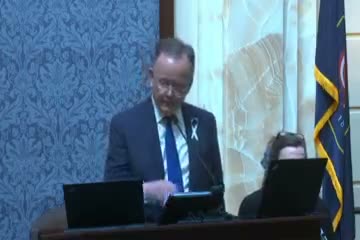
Senator Evan V. Fillmore, the Senate floor sponsor, said the bill “works … to tackle this problem at the front end rather than just dealing with the effects of it on the back end,” adding it requires school boards to create policies, allows schools to seize devices and integrates vaping prevention into existing tobacco and substance‑abuse education.
Supporters emphasized prevention and local control. “The most important part of this bill is the preventive measures that we’re taking on the front end,” Fillmore said, noting the measure adds funding‑coordinated programs and in‑school supports aimed at reducing social isolation among students.
Opponents and some supporters raised concerns about the school‑to‑prison pipeline and whether the measure would push schools to involve police. Senator Davis asked whether the bill could “destroy their lives” if schools take punitive approaches; Senator Fillmore responded that “there’s nothing in here that requires the school or will, or even incentivizes the school to involve law enforcement any more than they currently do,” and said law enforcement would only be involved when existing criminal law makes that necessary or when a device must be preserved as evidence.
Senator Escamilla said the bill’s intent is good but urged vigilance: lines in the bill allow local law enforcement to request that a school release a confiscated device for an investigation. “We need to keep our eyes open,” he said, warning about disproportionate impacts on communities of color and low‑income students.
The Senate voted to pass the third substitute of H.B. 58 under suspension of the rules. The roll call recorded 28 yeas, 0 nays and 1 absent; the bill will be returned to the House for further consideration.
What’s next: The bill moves back to the House for any final concurrence and then to the governor. Sponsors said the administrative implementation—school policy templates and training—will determine how often law enforcement becomes involved in practice.