Get Full Government Meeting Transcripts, Videos, & Alerts Forever!
Get email alerts on the Tobacco Vaping topic
No spam. Unsubscribe anytime.
Utah Senate narrows flavored vape sales to specialty shops, approves new proximity and enforcement rules
Summary
After extended floor debate and amendments, the Senate passed the 6th substitute to House Bill 23, moving most flavored vaping products into specialty shops, strengthening ID and penalty provisions, and setting new proximity and grandfathering rules; the bill passed 22–6.
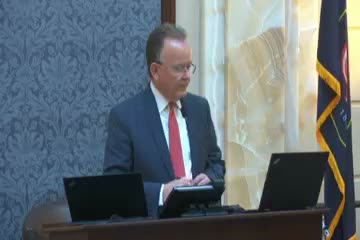
Salt Lake City — The Utah Senate on March 11 approved substantial new restrictions on flavored electronic cigarette products and specialty vape retailers, voting 22–6 to pass the 6th substitute of House Bill 23 after hours of floor debate and multiple amendments.
Senator Philip Cullimore, sponsor of the 6th substitute, said the measure seeks to close a “shadow market” of shops that use general retail tobacco licenses to operate as specialty vape stores and creates a regulatory regime that assigns specialty shops to local health department enforcement, requires ID verification and escalating penalties, and moves flavored products out of general retail outlets. “There is a lot of good stuff in this bill that addresses that so that we don't have to deal with this kind of shadow market,” Cullimore said.
Supporters argued the substitute balances enforcement tools and a two‑year runway for some businesses to comply. Senator Cullimore proposed an amendment to prohibit operation of a shop selling tobacco products under the guise of a specialty license within 1,000 feet of a school beginning Aug. 15, 2020; that amendment was adopted on the floor. Opponents warned that the bill’s grandfathering language—using a 2018 cutoff and criteria tied to lines in the bill—could let some retailers near parks or daycares avoid new proximity limits. Senator Antonio Escamilla said he was “completely opposed” to language that could grandfather such shops and urged colleagues to examine the details closely.
A heated floor fight centered on whether mint and menthol flavors should be exempted from the specialty‑shop restriction. Senator Eric Christiansen, citing data he said shows roughly two‑thirds of youth vaping products contain mint or menthol, moved to remove menthol and mint from the list of permitted general‑retail flavors; the motion failed after a standing count. Senator Hilliard and others argued for removing menthol and mint to reduce youth access; Senator Vickers and others warned of disturbing the negotiated compromise that produced the substitute and about potential unintended consequences.
Senator Iwamoto offered a motion to restore local control on some provisions; that motion failed on the floor after debate in which local health departments, cities and towns were variously described as seeking continued status‑quo authority. The final bill preserves certain statewide standards while assigning enforcement to local public health authorities and including preemption language in limited areas, Cullimore said.
Retail‑industry groups and some local officials testified in opposition on previous drafts; supporters said the substitute includes stepped penalties and license revocation for repeat violations and aims to keep flavored products out of the hands of minors.
The Senate rejected several floor amendments that would have widened or narrowed the bill’s scope and then passed the 6th substitute 22–6 with one senator absent. Under the rules the bill will be returned to the House for further consideration.
What’s next: The House will receive the amended substitute. Because the measure was materially changed on the floor, it may return to a conference committee if the chambers cannot concur on the Senate’s changes.