Get Full Government Meeting Transcripts, Videos, & Alerts Forever!
Get email alerts on the Floor Votes Roundup topic
No spam. Unsubscribe anytime.
Utah Senate advances a slate of bills, including digital IDs and housing-loss reporting; one bill fails
Summary
The Utah Senate approved multiple concurrence and third-reading bills — including a digital driver's license amendment, a housing-loss reporting requirement for UDOT, and protections for 340B clinics — while one education-related bill failed. Votes and key sponsor points are listed below.
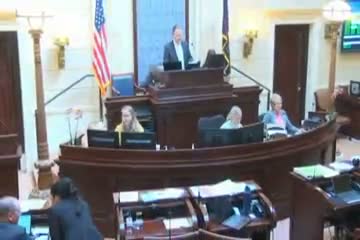
The Utah State Senate used its floor session to move a broad package of bills to the House and to final action, approving several measures by recorded roll call and returning them for the House speaker's signature.
Senators voted to concur with House amendments and to pass Second Substitute Senate Bill 23 (occupational and professional licensing technical corrections). Sponsor Curtis Bramble said the changes were technical and did not change the bill’s substance; the chamber approved concurrence and completed a roll-call for final passage.
The chamber passed bills on a range of topics. Senator Fillmore described Second Substitute Senate Bill 110, an amendment to the digital driver’s license proposal that "include[s] state-issued ID cards as well as driver's license[s]," and the bill passed the Senate 24–0 with five absent. Senator Kitchen said Second Substitute Senate Bill 122, a narrowed housing-loss mitigation measure, will require a report from the Utah Department of Transportation on housing units lost to road construction and their place on the affordability spectrum; SSB 122 passed 26–0 with three absent and carries a $0 fiscal note as announced on the floor.
Lawmakers also approved Second Substitute Senate Bill 138, a compromise addressing 340B pharmacy transactions and pharmacy benefit manager (PBM) arrangements intended to protect revenue streams for clinics serving low-income and rural patients; the bill passed 27–0 with two absent. First Substitute Senate Bill 154 (interlocal entity amendments) passed 27–0, and Senate Bill 144 (water-related process amendments) passed 26–0; other numbered measures received recorded tallies as described on the floor.
Not every proposal cleared the chamber. Senate Bill 198, a measure that would have required training standards for substitute teachers hired through employment agencies, failed on a roll call, 12–15 with two absent; the chair announced it will return to the rules committee.
The Senate also handled a high-profile concurrence dispute: the chamber moved not to concur on the House amendment to third substitute Senate Bill 67 (disposition of fetal remains) and directed the matter to a conference committee because of constitutional questions raised by staff and members.
What happens next: Bills that passed with concurrence will be returned to the House for the speaker’s signature or further action as recorded. Measures sent to conference will be negotiated by a joint committee of House and Senate members.
Votes at a glance (selected floor tallies announced on the record): - Second Substitute Senate Bill 23: concurrence moved and passed (voice/roll call recorded). - Senate Bill 34: passed 20 yea, 0 nay, 9 absent (returned to House). - Second Substitute Senate Bill 51: passed 26–0, 3 absent. - Second Substitute Senate Bill 110 (digital ID amendment): passed 24–0, 5 absent. - Second Substitute Senate Bill 122 (housing-loss reporting): passed 26–0, 3 absent; fiscal note reported as $0. - Second Substitute Senate Bill 138 (340B/PBM protections): passed 27–0, 2 absent. - First Substitute Senate Bill 154 (interlocal amendments): passed 27–0, 2 absent. - Senate Bill 198 (substitute teacher training): failed 12–15, 2 absent.
The Senate recessed until 2 p.m. to continue its business later in the day.
(Reporting note: vote tallies, fiscal-note remarks, and sponsor explanations are taken from the Senate floor transcript of the session. Additional details such as final House action or governor signature are not in the transcript and therefore are "not specified" in this report.)