Get Full Government Meeting Transcripts, Videos, & Alerts Forever!
Get email alerts on the Distracted Driving topic
No spam. Unsubscribe anytime.
Senate debates hands‑free distracted‑driving bill, votes to table after close count and procedural recheck
Summary
After hours of technical questions and sometimes emotional floor debate, the Utah Senate voted to read House Bill 101 for a third time but then moved to table it on fiscal grounds following a disputed vote count and a procedural revote. Sponsors said the hands‑free measure aims to reduce crashes; opponents warned of enforcement and safety tradeoffs.
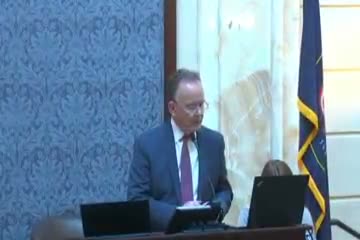
Senators spent more than an hour examining House Bill 101, the distracted‑driver amendments sponsored on the floor by Senator Don Ibsen, before voting to table the measure on third reading.
The bill would limit ‘‘manual manipulation’’ of handheld wireless devices while operating a vehicle and generally make violations infractions with a maximum fine of $100, escalating to a class B misdemeanor only if the conduct causes serious bodily injury. "This bill will make Utah a safer place to drive, but more importantly, will make us a safer place to live," Senator Ibsen said on the floor.
Lawmakers focused on definitions. Senator Henderson asked whether ‘‘manually manipulate’’ would make a driver who simply holds an unused phone in violation; sponsors and colleagues answered that the bill’s definition includes holding the device. Senators also questioned whether the bill’s language requiring a device be "mounted" on a windshield, dashboard or center console could be read too narrowly and unintentionally criminalize commonplace behaviors such as checking a GPS that is not physically mounted.
Several senators raised enforcement concerns. Senator Andrade and others asked whether officers would need a photo or other evidence to prove a hands‑on violation and whether the bill would create a prima facie standard in court. Supporters responded that typical police testimony and, when needed, digital device records and other evidence could be used in prosecutions. Opponents said practical policing and privacy limits might make some enforcement scenarios difficult. Senator McKay warned that shifting phone use from above the steering wheel to lower consoles could increase the time drivers take their eyes off the road.
The body took a roll‑call vote to read the bill a third time; initial and follow‑up counts were inconsistent in the public roll, prompting the presiding officer to call for a revote and clarification of whether HB 101 was before the Senate. Ultimately the clerk recorded the third‑reading tally and then senators adopted a motion to table HB 101 on third for fiscal impact. The motion to table passed.
The procedural confusion and the questions that dominated the debate — about mounted devices, stopped traffic vs. parked vehicles, emergency and law‑enforcement exceptions, and how officers would prove violations — mean sponsors and opponents will likely return to technical drafting, enforcement standards and fiscal implications before the bill advances.
The Senate recessed for committees and planned to return later in the day to continue floor business.