Get Full Government Meeting Transcripts, Videos, & Alerts Forever!
Get email alerts on the Sb83 Privacy topic
No spam. Unsubscribe anytime.
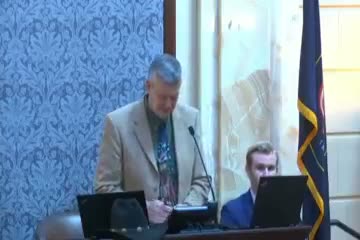
Senate adopts substitute to voter‑registration privacy bill after debate over penalties and exemptions
Summary
The Senate adopted a third substitute to Senate Bill 83 that narrows public release of voter‑registration data, allows opt‑outs and creates limited exceptions for campaigns and vulnerable people; senators asked for clarification on criminal penalties and domestic‑violence survivor definitions and the sponsor agreed to recircle the bill for legal review.
The Utah Senate adopted a third substitute to Senate Bill 83 on the floor today after extended debate over how the state handles voter‑registration information, who may access it and what penalties apply for misuse.
The substitute presented on the floor narrowed the public release of registration records to a limited set of data points, as described by the sponsor: name, address, political affiliation, a record that the registrant voted, and year of birth (but not month or day). The substitute preserves an opt‑out mechanism so individuals may protect their records from broader release and includes exceptions that permit campaigns and parties access under specific conditions and carve outs for people at risk, the sponsor said.
Senators on both sides asked detailed questions. Senator Iwamoto asked whether domestic violence advocacy groups had been consulted; the sponsor said outreach had been attempted but that direct response was not yet received and offered to follow up. Senator Henderson sought clarification about the criminal and civil penalties mentioned in the bill text, asking where the offense and penalty definitions reside. On the floor the sponsor said the substitute ties into an existing protective statute and noted that existing code provides criminal and civil penalties (the sponsor referenced a class‑A misdemeanor provision and potential fines tied to data‑point disclosures), but agreed to verify the statutory cross‑references and to recircle the substitute if needed so attorneys and stakeholders could confirm the wording.
The substitution motion to replace the bill with the third substitute passed on the floor; senators later voted to 'circle' the measure so that the sponsor and attorneys could confirm the statutory references, the definition of "domestic violence" to be used for protections, and whether additional clarifying language was required. Several senators suggested explicitly using broader definitions (for example, federal VAWA definitions) to ensure survivors of dating and non‑spousal violence are covered; the sponsor agreed to verify and return with clarified language.
The exchange on SB 83 centered on two practical points: protecting voter privacy from commercial use and public posting while preserving the functioning of campaigns and parties; and ensuring the bill’s penalties and exceptions are clearly anchored in existing law so practitioners understand what conduct would be criminal or civilly liable. The sponsor noted the bill does not create new penalties but references existing code that does. The Senate adopted the third substitute and then paused further final action to permit verification and any needed technical edits.
Next steps: the sponsor will work with the attorney general’s staff, the Lieutenant Governor’s elections office, and stakeholders (including domestic‑violence advocates and county clerks) to verify definitions, statutory references and rule guidance; the bill is expected to return to the floor after those clarifications are completed.