Get Full Government Meeting Transcripts, Videos, & Alerts Forever!
Get email alerts on the Daylight Savings Time topic
No spam. Unsubscribe anytime.
Senate advances bill to pursue year‑round daylight saving time, contingent on other states and Congress
Summary
Sen. Harper presented SB59 to keep Utah on daylight saving time year‑round if Congress acts and at least four other states adopt similar measures; senators raised concerns about school start times and interstate boundaries. The Senate read the bill for a third time on a 28–1 vote and it advances to the next stage.
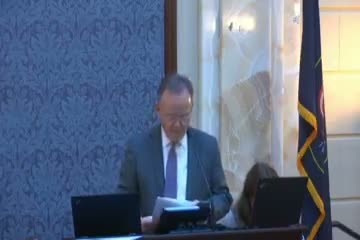
Sen. Dan Harper introduced Senate Bill 59 on the Senate floor, proposing that Utah adopt year‑round daylight saving time if Congress authorizes states to make the change and if at least four other states adopt similar measures alongside Utah.
"It's a very small bill," Harper said, summarizing outreach with the Council of State Governments and the National Conference of State Legislatures and noting multiple states have introduced related legislation. He said the bill includes a contingency provision to reduce the chance Utah would be isolated if neighboring states do not act.
Sen. Hilliard, citing surveys he distributed, said "the one thing everybody agrees to, they don't like the current system," and indicated many constituents favor eliminating the twice‑yearly clock changes. Several senators pressed the sponsor on language that requires other states to opt in; Hilliard clarified the bill's contingency requires four other states in addition to Utah, not five. Senators also asked whether local school districts had been consulted; Harper said he and other legislators have met with district representatives and that some districts support the change because it could allow later school start times.
Opponents and questioners raised practical concerns about travel across time zones and potential health impacts when residents cross state lines. Harper said the Utah Medical Association had provided testimony highlighting specific health risks for vulnerable groups, but the bill itself does not include a medical‑warning provision.
After discussion and summation, the Senate voted to read SB59 for a third time. The roll call produced 28 yea votes and 1 nay, and the bill will proceed to the next calendar step for further consideration.
The next procedural step for SB59 is the third‑reading calendar and any subsequent votes or amendments that may be scheduled when the bill returns to the floor.