Get Full Government Meeting Transcripts, Videos, & Alerts Forever!
Get email alerts on the Legislative Votes topic
No spam. Unsubscribe anytime.
Utah Senate clears a slate of bills on education, environment, corrections and energy; HJR12 honoring suffrage passes
Summary
The Utah Senate passed multiple bills on Feb. 14, 2020, including measures on education, corrections officer certification, environmental regulatory authority and an energy storage grant program; it also unanimously approved a House joint resolution marking the 150th anniversary of women—s suffrage in Utah.
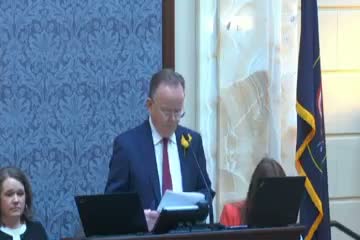
The Utah Senate on Feb. 14, 2020, moved a package of bills to the House after roll call votes on a range of topics from education to environmental regulation and energy storage.
First substitute Senate Bill 21, an education bill described on the floor as making four specific changes previously discussed in committee, passed on a voice and roll call vote and will be sent to the House. The motion to pass was moved by the bill sponsor on third reading and received 28 yea, 0 nay, 1 absent.
Senate Bill 48, which extends a corrections officer certification pilot program that had been under review, was presented by Senator Iwamoto, who said sheriffs supported more time to let students complete the program and enter the workforce. The Senate passed SB48 by roll call, 27 yea, 1 nay, 1 absent; the bill will be transmitted to the House.
Senate Bill 88 clarifies and extends authority within the Department of Environmental Quality: Senator Okerlund said the bill gives the Division of Drinking Water director authorities similar to those granted to other division directors in 2012 (permit issuance, enforcement and adjudicative authority) and grants limited decision authority to the Division of Air Quality director. The Senate passed SB88 by roll call, 27 yea, 0 nay, 2 absent.
Senate Bill 78 would establish an Energy Storage Innovation Research and Grant Program. Sponsor Senator Fillmore described storage as "one of the key components of what will be the future of energy use" and said the bill incentivizes early development to enable deployable, scalable projects. Senator Okerlund explained his aye vote but urged scrutiny of whether the state is getting "the biggest bang for the buck" given funding levels. SB78 passed 26 yea, 3 nay and will go to the House.
Senate Bill 22, described by Senator Iwamoto as a high-priority bill for Native American communities to address capacity and health-access challenges, passed unanimously by voice and roll call (29 yea, 0 nay, 0 absent).
Senate Bill 79, which codifies regional education service centers and shifts funding recommendation responsibilities to the State Board of Education and the Public Education Appropriations Committee (removing an automatic inflation figure), passed 28 yea, 0 nay, 1 absent after sponsor explanation and clarifying questions on funding mechanics.
First substitute Senate Bill 90, procurement code amendments, was presented as having passed unanimously in committee; it passed on the floor by roll call, 27 yea, 0 nay, 2 absent and will be sent to the House.
Separately, Senate Bill 76 (governmental immunity revisions) was moved to be circled pending stakeholder amendment and will not advance immediately. Several House bills were transmitted to the Senate for first reading and referral to rules at the start of the session.
The Senate also suspended the rules to read and pass House Joint Resolution 12 celebrating the 150th anniversary of women—s suffrage in Utah; that resolution passed unanimously and will be returned to the House with the president's signature.
What happens next: Passed Senate bills are transmitted to the House for its consideration; SB76 remains on hold pending further work.