Get Full Government Meeting Transcripts, Videos, & Alerts Forever!
Get email alerts on the Transportation Rail topic
No spam. Unsubscribe anytime.
Senate approves bill to fund statewide rail plan after debate over public input and fiscal note
Summary
Senate Bill 92, sponsored by Senator Andrig, directs a $2.1 million, roughly 18-month effort to create a statewide comprehensive rail plan focused on electrification, double-tracking and integrating short-line freight with commuter service; senators pressed for public engagement and local land-use coordination before final passage.
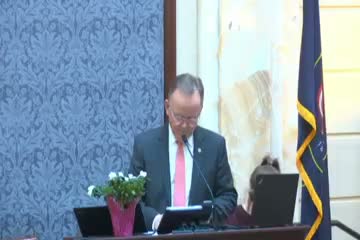
Senate Bill 92, a statewide comprehensive rail plan sponsored by Senator Andrig, was advanced by the Utah Senate after a floor presentation and roll-call vote.
Andrig told colleagues the bill grew from a three‑year collaboration among UDOT, UTA, regional councils and inland-port stakeholders and is intended to create a “game plan” for electrifying and double‑tracking rail, improving reliability and integrating short‑line freight and commuter services. He said the plan would examine sustainable options, potential revenue mechanisms such as freight fee collections, and connections to inland port development. "We have to have a multimodal transportation system," Andrig said, framing the bill as a response to rapid population growth.
The fiscal note attached to the bill totals $2,100,000, presented as roughly $1,050,000 in year one and $1,050,000 in year two; Andrig said the timeline to complete the plan would be about 18 months and that the sponsor could consider phasing funding if helpful.
Several senators sought assurances about public engagement and local land‑use coordination. Senator Ravey asked whether the bill provides opportunities for public meetings; Andrig said he would add public‑engagement language before third reading and acknowledged ongoing business‑case work by inland‑port consultants. Senator Kitchen asked about municipal and county land‑use roles; Andrig said a separate transit‑oriented development bill would address land‑use specifics and that the rail plan intentionally left some local planning questions to companion legislation.
Senators representing rural and export interests pressed to ensure the study accounts for freight needs statewide. Senator Okerlund noted Utah’s largest exports traverse long distances and said rail could reduce empty one‑way truck trips and road wear.
Supporters emphasized long‑term environmental and congestion benefits. Senator Escamilla said community input is critical and expressed support for the appropriation to make the plan comprehensive.
The Senate approved reading SB92 a third time; the president reported 26 yay votes, 0 nay votes, and 3 absent. The bill now moves to the next step in the process and, per the sponsor's remarks, may be adjusted to include explicit public‑engagement provisions prior to third reading.