Get Full Government Meeting Transcripts, Videos, & Alerts Forever!
Get email alerts on the Floor Votes topic
No spam. Unsubscribe anytime.
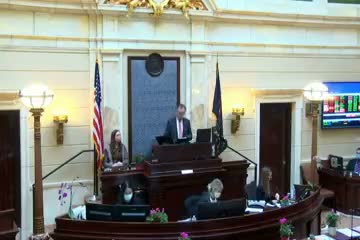
Senate passes broad package on Feb. 12: telehealth, licensing, tax and other bills advance
Summary
On Feb. 12 the Utah Senate approved a slate of bills on third reading and concurrence including first substitute SB 41 (mental‑health telehealth, 29–0), first substitute SB 87 (professional licensing, 20–9), SJR 5 (29–0), and multiple House bills (HB 39, HB 33, HB 166, HB 57, HB 128 and others) that were returned to the House or transmitted for signatures.
The Utah State Senate on Feb. 12 considered and approved a broad floor calendar, passing a mix of Senate and House bills by voice and recorded roll call votes.
Key floor actions and outcomes
- First substitute Senate Bill 41 (Mental Health Access Amendments): The Senate concurred with House amendments to accelerate implementation (effective upon the governor's signature) to expand telehealth access for mental health; the motion to pass the bill carried on roll call with 29 yeas, 0 nays. Sponsor: Senator Escamilla (motion to concur recorded on the floor).
- First substitute Senate Bill 87 (Professional Licensing Amendments, cosmetology/sanitation/hair safety permits): Sponsor Senator Bramble described the House substitute and sanitation provisions. After brief remarks and an explanation of a 'no' vote from Senator Wyler, the Senate passed the bill 20 yeas, 9 nays and will return it to the House.
- First substitute Joint Resolution 5 (procedural rules for reassigned legislation): The Senate concurred and passed the resolution 29–0.
- Several House bills on third reading passed and were returned to the House for signature or transmittal, including House Bill 39 (corporate tax adjustments, 28–0, 1 absent), House Bill 33 (community correctional center amendments, 28–0, 1 absent), House Bill 166 (livestock amendments, 26–3), House Bill 57 (Armed Forces amendments, 28–0, 1 absent), House Bill 128 (local accumulated fund balance amendments, 28–0), House Bill 141 (municipal services amendments, 28–0), House Bill 85 (controlled substance database access, 29–0), House Bill 110 (health care payment amendments, 29–0), House Bill 202 (Healthcare Consumer Protection Act, 28–0, 1 absent), House Bill 20 (DUI sentencing amendments, 28–0, 1 absent), and many others.
Procedural notes: Several bills were circled or substituted for further review (notably SB 107 and SB 128). The Senate used voice votes for preliminary concurrence motions and recorded roll calls for final passage on several measures.
What this means: The chamber advanced a wide set of policy changes — from telehealth and licensure to tax relief and statutory clarifications — while deferring further votes on bills that elicited sustained debate over implementation or scope.