Get Full Government Meeting Transcripts, Videos, & Alerts Forever!
Get email alerts on the Agriculture Tax Policy topic
No spam. Unsubscribe anytime.
Senate amends urban-farming tax break to include livestock and removes county-class exclusion
Summary
The Senate amended and passed HB 390 to add livestock to allowable 'marketable crops' for urban-farming tax breaks and adopted a floor amendment deleting provisions that excluded first- and second-class counties; supporters said the change restores reach to mountain counties and addresses local agricultural practices.
Senators debated and then passed first substitute House Bill 390, which expands the state's urban-farming tax-break rules to include livestock as an allowable marketable crop in counties outside the two most populous classes and requires a county ordinance and annual application to qualify.
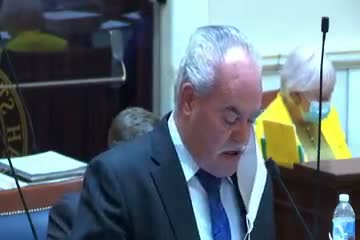
Sponsor Senator Winterton noted the prior law targeted small parcels and marketable crops and that HB 390 updates that framework to reflect higher-elevation counties where crop selection differs. "House Bill 3 90 adds livestock to the list of allowable crops," Winterton said during opening remarks.
The measure generated detailed questions about rollback taxes, the required acreage (minimum one acre), the role of county assessors in on-site verification and the statutory profit test that determines eligibility. Senator McKay moved to strike lines 56–59 (which had excluded first- and second-class counties); that motion was adopted as a floor amendment and incorporated into the substitute. Supporters described the amendment as ensuring the tax treatment is available for small-area farmers who still raise livestock for market or 4-H activities.
After the amendment and a written floor amendment to reconcile earlier verbal changes, the first substitute HB 390 passed on a roll-call under suspension of the rules and will be returned to the House.
Supporters said the bill closes an inequity for mountain and rural counties; opponents cautioned about opening potential loopholes and asked for follow-up with county assessors to ensure enforcement.