Get Full Government Meeting Transcripts, Videos, & Alerts Forever!
Get email alerts on the Education Tax Credit topic
No spam. Unsubscribe anytime.
Senate debate on alternative-education tax credit ends with failed third-reading threshold; bill returned to second calendar
Summary
Senate Bill 242, a one-time refundable tax credit for certain 2020–21 education expenses, drew questions about a $3.3 million fiscal note and unclear implementation. A roll call produced 13 yeas, short of the 15 required; the chamber later voted to reconsider and placed the bill back on the second-reading calendar.
Senate Bill 242, the Alternative Education Tax Credit Amendments, which would create a one-time refundable tax credit for certain 2020–21 education expenses when a dependent left public school for private or home education, was discussed on the Senate floor and failed to achieve the votes needed to advance on its initial third-reading attempt.
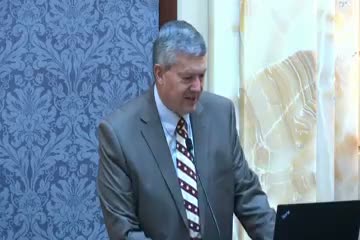
Senator Johnson introduced the measure as a narrow response to pandemic-era disenrollment: "This bill is a fairly simple one. It enacts a refundable tax credit for certain educational expenses," he said, describing the credit as applicable for dependents who moved from public to private or home schooling for the 2020–21 period. He said the measure targets expenses tied to that transition.
Senator Reby questioned whether school boards or associations supported the bill and flagged practical and fiscal concerns. "I did receive some information from stakeholders that are opposed to this bill," Reby said, adding officials had limited information at the time and schools did not always know who was or was not showing up. Reby cited the bill's fiscal note: "This bill has a fiscal note of, dollars $3,327,000 that is going to be paid out to people who just decided not to show up to school," she said, and asked how receipts and eligibility would be verified.
After brief further discussion, Senator Johnson moved to place SB 242 on the third-reading calendar. The clerk recorded a roll call that produced 13 yea votes, 9 nay votes and 7 absent. The presiding officer noted the bill required at least 15 yea votes to pass; under that point of order the bill did not pass and was ordered filed. Later in the session, Senator Winterton moved to reconsider the chamber's action on SB 242; the motion to reconsider passed and the presiding officer placed the bill back on the top of the second-reading calendar for additional consideration.
The debate on SB 242 focused on verification and implementation questions (what documentation would be required, how the credit would be allocated) and on the fiscal impact cited in the fiscal note. The chamber did not adopt any amendments during the floor discussion. The next procedural step is further consideration from the second-reading calendar following the successful motion to reconsider.
No final cut or enactment vote on the bill was recorded during this floor session.