Get Full Government Meeting Transcripts, Videos, & Alerts Forever!
Get email alerts on the Emergency Powers topic
No spam. Unsubscribe anytime.
Senate passes emergency-response amendments after clarifying language for religious organizations
Summary
The Utah Senate amended and passed second substitute Senate Bill 195, which revises government emergency authorities and creates funding structures for crisis response; sponsors removed ambiguous 'may' language about religious organizations and the bill passed on a 28–0 vote with one absence.
The Utah Senate on day 35 amended and passed second substitute Senate Bill 195, a wide-ranging measure that revises the state's emergency-response framework and clarifies how state and local authorities act in prolonged emergencies.
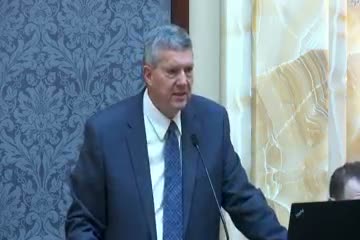
Senator Vickers, sponsor of SB195, told the chamber the amendment (floor amendment 1) removes language that had created public confusion about whether religious organizations could be treated differently under emergency rules. ‘‘The amendment simply ... makes clear that religious organizations cannot be treated differently than other similar businesses or similar organizations,’’ Vickers said when presenting the change.
Sponsor remarks and subsequent debate framed the bill as a measured update to an emergency statute that has not been comprehensively reviewed since 1953. Vickers and other proponents said the intent is to balance executive authority with legislative oversight, preserve local authority for counties and local health departments, and allow the governor and state health officials to respond when necessary.
Senator Weiler, speaking in support, described the statute as a "measured approach" and said the 30-day framework and oversight provisions represented appropriate legislative involvement rather than a knee-jerk reaction. Opponents in public commentary and media had previously expressed two camps of concern—either that the bill went too far or not far enough—senators said; sponsors responded by negotiating clarifications with counties and executive offices.
The Senate adopted amendment 1 without recorded objection and passed the second substitute by roll call. President Adams announced the final tally: 28 yea, 0 nay, 1 absent. The bill will now be transmitted to the House for further consideration.
The bill, as amended, adds a prioritized implementation path (answering crisis phone lines first), an account for crisis-response funding, and language assigning additional members to existing commissions to oversee rollout and reporting. Sponsor remarks said full implementation would require appropriations and that the fiscal note models full-scale costs while actual implementation will be phased based on available funding.