Get Full Government Meeting Transcripts, Videos, & Alerts Forever!
Get email alerts on the Special Education topic
No spam. Unsubscribe anytime.
Utah Senate advances narrower special-education rules, broadening who may deliver IEP services
Summary
After extended floor debate, the Senate advanced a third substitute to Senate Bill 175 to align state 'least restrictive' language with federal rules and allow supervised credentialed aides to deliver some services in classroom settings; the measure passed third-reading 16-13.
The Utah Senate on Feb. 19 advanced third substitute Senate Bill 175, a package of changes aimed at broadening how individualized education program (IEP) services can be delivered while keeping federal accounting and IEP-team control intact.
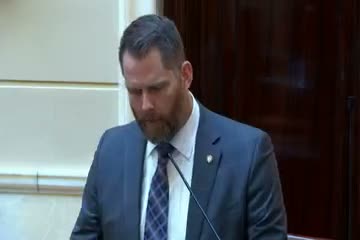
Sponsor Senator Anderegg told colleagues the third substitute was designed to “broaden that definition to a workable amount” and to align state practice with federal definitions so that services “work in tandem.” He said the change would allow certified, supervised paraprofessionals (referred to in debate as "au pairs") to deliver in-class supports where appropriate, rather than requiring frequent pull-outs for one-on-one instruction.
The bill’s sponsor and supporters argued the change responds to long-standing teacher shortages. “The ultimate goal of what we're trying to do here is we're trying to get more certified credentialed adults providing these services to the kids,” the sponsor said, adding that “the IEP controls” and that the accounting will “happen exactly the same as the accounting is happening on this right now.”
Opponents, including Senator Riebe, pressed for measurable outcomes and raised concerns the change could dilute individualized instruction. Riebe asked how the Legislature would “measure that growth” and whether students would still receive dedicated instruction. Senators also questioned potential impacts on funding mixes between charter schools and traditional district schools and whether increased IEP prevalence in some schools could draw down finite special-education dollars.
Sponsor responses emphasized federal alignment: “Incidental benefit means the same as … services and aids that also benefit non-disabled children, as defined in the federal code,” he said, asserting the substitute ties state rules to federal standards to avoid creating “a separate track.” He also pledged to continue discussions on the precise incidental-benefit definition with stakeholders.
After extended exchanges on measurement, accounting/coding, parental role in IEP teams, and limits to ensure services are not inappropriately diluted, the Senate voted to read the third substitute for SB175 a third time. The roll-call recorded the bill as receiving 16 yay votes and 13 nay votes on the question to read it a third time.
What happens next: the bill advanced out of the floor action taken Feb. 19; further steps (final passage and transmittal) will follow normal Senate procedures. The bill includes multiple technical and policy provisions; the sponsor said he remains willing to meet with stakeholders to refine definitions and implementation details.
Votes and formal action: The Senate recorded a roll-call to read third substitute SB175 a third time and the chair announced the result (16 yay, 13 nay). Several senators who voiced opposition asked for further meetings with the sponsor.
Sources and attribution: Quotations and attributions in this article come from Senate floor remarks on Feb. 19, 2021 (sponsor Senator Anderegg and Senators Riebe, Fillmore, Johnson, Owens, Escamilla and others).