Get Full Government Meeting Transcripts, Videos, & Alerts Forever!
Get email alerts on the Tax Policy topic
No spam. Unsubscribe anytime.
Senate approves measured income-tax rate cut, 22–5, sending second substitute of SB59 to House
Summary
The Utah Senate on Friday approved a second substitute for Senate Bill 59 to reduce the state individual income-tax rate to 4.85 percent and make related business-input clarifications; the measure passed 22–5 amid debate over impacts on services and a $160 million fiscal note.
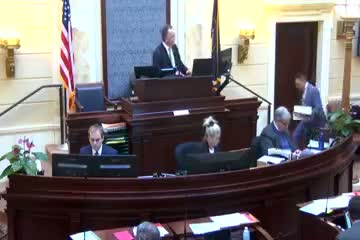
SALT LAKE CITY — The Utah Senate voted Friday to approve a second substitute for Senate Bill 59, a package that lowers the state individual income-tax rate to 4.85 percent and includes technical changes affecting business input taxation. The measure passed on a roll call, 22 yeas to 5 nays, with two senators absent, and will now go to the House for consideration.
Sponsor Senator McKay, speaking on the floor, framed the bill as a cautious, incremental tax cut intended to return revenue to taxpayers while protecting core services. “We started at 4.9, and we took it down, committing down to a 4.85,” McKay said, noting the package’s fiscal note near $160,000,000 and that the House may add additional credits such as an earned-income tax credit.
Opponents said the proposal risks undercutting funding for services that remain stretched. “This amount of money could mean, really raising their quality of life,” said Senator Davis, who voted against the bill and urged caution because some programs, including services for people with disabilities, remain under-resourced. Senator Escamilla asked for bracket-specific impacts and warned that a rate decrease during economic uncertainty could make later budget restorations painful.
Supporters argued Utah’s fiscal position and rainy-day funds provide room for a measured cut. McKay told colleagues the state’s total budget is about $25.6 billion and highlighted education commitments and a near-$600 million combined education rainy-day balance, saying the state was prepared for downturns while still returning funds to taxpayers.
The final vote came after procedural substitution: Senators agreed to delete the first substitute and replace it with the second substitute on the floor, and a motion under suspension of the rules carried to pass the bill immediately.
The next step is consideration in the Utah House, where sponsors expect further amendments and additions, including possible adjustments to social-security tax credits and creation of an earned-income tax credit for low-income households.
Votes at a glance: second substitute SB59 passed 22–5 with two absent; supporters cited a roughly $160 million fiscal impact; opponents urged retaining funds for social services and education.