Get Full Government Meeting Transcripts, Videos, & Alerts Forever!
Get email alerts on the Birth Certificates topic
No spam. Unsubscribe anytime.
Senate advances bill limiting changes to minors' birth certificates with narrow exceptions
Summary
Senate Bill 93 would bar changes to birth certificates for people under 18 except for adoption or when prior records show an error; sponsor said the measure preserves vital-record accuracy used for population and funding decisions. The Senate advanced the bill to third reading, 21-8.
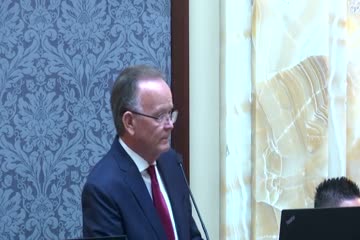
Senator McKay said Senate Bill 93 is "very simple": it would prevent changes to birth certificates for people under 18 except in two narrow circumstances — adoption and when prior medical or other records demonstrate an error. He moved the bill to be read for a third time, saying the measure is meant to preserve the birth record as a fixed "moment in time."
Supporters framed the bill as protecting the integrity of government records used for population counts and state funding. "Remember what government records are? They are a recordation of a moment in time of when an event occurred," McKay said, arguing that birth records feed data used for transportation funding and Medicaid allocations.
Senator Thatcher pressed the sponsor on individual rights, asking, "What is the compelling state interest in telling people that they can't change their birth certificates?" Thatcher said he did not see how allowing changes would alter population numbers and urged the Legislature to leave such decisions to individuals. McKay responded that the state relies on consistent records for policy and accounting.
Senator Plumb asked whether SB93 was intended to address issues related to a separate House bill on athletics (referred to in committee as House Bill 11) and whether a narrower fix might achieve the sponsor's aims without a broad prohibition; McKay said he was open to narrower approaches.
After debate and a brief explanation of votes from several members, the Senate recorded a roll-call result: 21 ayes and 8 nays, with no absences. The presiding officer ordered the bill read a third time, advancing it procedurally toward final consideration.
The Senate then moved on to other business and adjourned for the day. The bill's next formal steps are the third-reading process already ordered by the chamber.