Get Full Government Meeting Transcripts, Videos, & Alerts Forever!
Get email alerts on the Child Exploitation topic
No spam. Unsubscribe anytime.
Senate approves bill extending child-exploitation provisions to AI-generated sexually explicit images of minors
Summary
The Utah Senate passed First Substitute House Bill 238 on the final day after sponsor testimony that artificially generated explicit images of children often derive from or aggregate real victims and should be treated as child exploitation. The bill passed under suspension of the rules (23–0, 6 absent).
On Feb. 29, 2024, the Utah State Senate approved First Substitute House Bill 238, a measure that extends child-exploitation protections to include certain artificially generated images depicting minors in sexually explicit contexts.
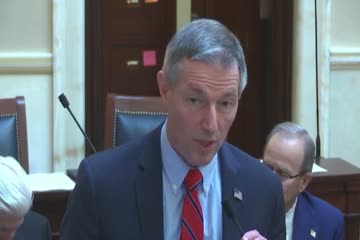
Sponsor testimony emphasized the harms posed by some AI-generated images and argued that such material frequently compiles elements of real victims’ imagery. "The idea that we should protect these under the constitutional free speech is abhorrent and repugnant," the floor sponsor said while urging colleagues to treat artificial images of exploited children as part of child-exploitation statutes rather than a recognized free‑speech category.
Senators voted to suspend the three‑reading requirement and proceed to final passage. The Senate recorded the bill as passing with 23 yeas, 0 nays and 6 absent. Floor remarks framed the measure as a protective step for minors and stressed the need to prevent tools producing exploitative images from creating new avenues for victimization.
Sponsor statements characterized the change as a clarification of existing protections to account for technological developments rather than a broad expansion of criminal liability beyond the explicit language on the floor. The bill will return to the House for its final processing. No defense or response from technology firms or other outside entities appears in the floor transcript.