Get Full Government Meeting Transcripts, Videos, & Alerts Forever!
Get email alerts on the Technology Child Safety topic
No spam. Unsubscribe anytime.
Senate passes Children—s Device Protection Act requiring default filters on new phones
Summary
The Utah Senate concurred with House technical changes and passed the 4th substitute to Senate Bill 104, which requires phones manufactured on or after Jan. 1, 2025, to ship with filters for adult websites enabled by default and allows adults to opt out. Sponsors said the change was designed to be technologically feasible.
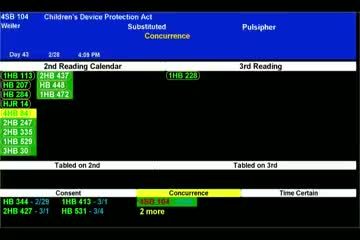
The Utah Senate on the floor passed the fourth substitute to Senate Bill 104, the Children—s Device Protection Act, requiring that phones manufactured after Jan. 1, 2025, have default filters blocking adult websites for users identified as minors, with an option for adults to disable the filter.
Senator Weiler, the floor sponsor, said the bill aims to make commercially available safeguards the norm: "This bill ... would require the cell phones to have the already installed filters activated for young people, minors," and noted the House made technical changes to improve feasibility. He said the law applies to phones manufactured after Jan. 1, 2025, to avoid forcing updates on older devices.
Supporters said the measure mirrors approaches used by some major software vendors and is intended to protect children from automatic exposure to explicit material. Weiler said several stakeholders worked to ensure the blocking targets "known websites with adult content" and to make the default-on approach practical for manufacturers and carriers.
No floor amendments were offered during the concurrence debate, and the Senate passed the bill under suspension of the rules by a recorded voice/roll call reported as 24 yeas, 0 nays, with five absent. The bill will be returned to the House for the speaker—s signature.
The sponsor said the House—s technical edits were negotiated to make the mandate implementable by industry and to reduce the risk that updating older phones would be required at activation. The bill does not create new criminal penalties; it requires manufacturers to set default filtering behavior and allows adults to opt out.
The next procedural step is a final transmission back to the House for the speaker—s signature; sponsors said they will continue outreach to large manufacturers as the effective date approaches.