Get Full Government Meeting Transcripts, Videos, & Alerts Forever!
Get email alerts on the Tracking Device Privacy topic
No spam. Unsubscribe anytime.
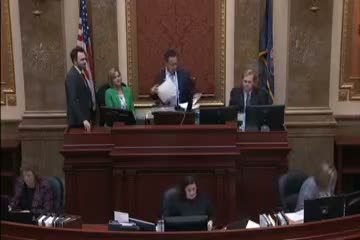
House refuses to concur with Senate narrowing of tracking-device bill after privacy debate
Summary
House members on March 14 refused to concur with Senate amendments to House Bill 223, which the Senate narrowed to prohibit installing tracking devices only in cases involving a protective order. Critics said the Senate language removes needed privacy protections for private citizens; supporters said the Senate changes still offer a 'baby step' to protect those under protective orders.
The Utah House voted on March 14 to refuse to concur with Senate amendments to House Bill 223, a measure originally drafted to restrict private-party installation of tracking devices on vehicles. The Senate-substituted version limits the prohibition to situations involving a protective order, a change that drew sustained floor criticism.
Representative Polson, the House sponsor, described the Senate substitution as a significant scaling back of the bill’s scope and called the narrower version a "baby step," but said he concurred with the amendment in its current form as a partial improvement. Several colleagues disagreed.
Representative Colin asked directly whether the Senate amendment still prevents a private party from placing a tracker on someone else’s vehicle without the owner’s knowledge or consent; the sponsor acknowledged the Senate language does not prohibit all private-party tracking and had pared back the original scope.
Representative Coleman voiced alarm at the idea that private trackers could be legally attached to a vehicle without the owner’s consent. "That we're even debating that someone could put a tracking device on my vehicle without my knowledge or consent," Coleman said, arguing the House should not concur with the narrowed bill.
Representative Ward moved a substitute motion to refuse to concur with the Senate amendments and seek recission; several members—including Representative Miles—spoke in favor of not concurring, arguing the House should pursue stronger protections or a conference committee to resolve differences. Representative Perry spoke against the substitute motion, saying the Senate amendment protects people with protective orders and that the narrower bill is the pragmatic step that would help those specific victims.
After debate the House voted to refuse to concur with the Senate amendments and ask the Senate to recede; the motion passed by voice vote on the floor. The transcript indicates the House placed the substitute motion and recorded the floor vote as passed; next steps may include conference or further negotiation between chambers.