Get Full Government Meeting Transcripts, Videos, & Alerts Forever!
Get email alerts on the Throughput Infrastructure topic
No spam. Unsubscribe anytime.
Utah House backs third substitute for throughput infrastructure bill amid debate over Oakland port funding
Summary
The Utah House adopted a third substitute to S.B. 248, routing proposed throughput infrastructure projects through the Community Impact Board (CIB) and authorizing a throughput fund; debate centered on using CIB royalty dollars for an Oakland ocean terminal, oversight of roughly $54.7 million, and pending litigation tied to the port plan.
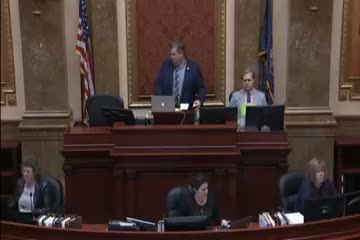
The Utah House on March 13 adopted a third substitute to Senate Bill 248, sending the measure back to the Senate after a 51–19 vote. The substitute keeps decision authority with the Community Impact Board — a locally driven board funded by oil, gas and mining royalties — and creates a throughput account designed to enable infrastructure funding for projects that extend beyond Utah's borders.
Sponsor Representative McKelvey said the change avoids creating a new state agency and instead relies on the CIB’s established review process. “These are not taxpayer dollars. These are royalty dollars,” McKelvey said, emphasizing that the funds originate from mineral royalties and are intended for rural infrastructure.
Floor debate focused on whether royalty dollars can be used to finance an ocean terminal project likely located in Oakland, California, and whether the language allows spending outside the United States. Representative Kwan asked specifically whether funds could be used out of the country; McKelvey said the vision included Oakland and noted a port in Mexico was also under consideration, but said projects must meet CIB criteria and benefit rural Utah.
Representative Snow and others pressed for legislative oversight of an approximately $54,748,500 transfer flagged in the fiscal note from the Throughput Infrastructure Fund to an interlocal agency. McKelvey responded the funding mechanism stems from a throughput account created two years earlier and that the CIB process, interlocal agreements and state energy office involvement provide review and oversight.
Several members expressed concern about moving significant royalty dollars to projects outside Utah and about the potential for reduced direct legislative control. Supporters from producing counties argued the CIB is governed by county representatives and that the projects were proposed by local coal- and mineral-producing communities seeking access to global markets for commodities such as potash, soda ash and hay.
The bill’s supporters said the substitute reduces state bureaucracy — using an existing board rather than creating a new office — while opponents said they worried about transparency and the degree of legislative review over a large interlocal expenditure. The sponsor also said litigation linked to the Oakland project had earlier rulings in the state's favor and that the outcome looked favorable, but acknowledged further appeals were possible.
Next steps: The House adopted the substitute and sent S.B. 248 back to the Senate for further consideration.