Get Full Government Meeting Transcripts, Videos, & Alerts Forever!
Get email alerts on the Air Quality Transit Pilot topic
No spam. Unsubscribe anytime.
House passes $1.2 million pilot to offer free transit on air-quality alert days
Summary
The House approved a three-year, $1.2 million pilot to provide free public transit on high-inversion air-quality days to reduce single-occupancy vehicle trips; sponsors cited a one-day trial that increased ridership 23% and said results will be reported to an interim committee.
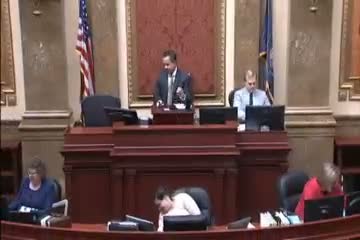
The Utah House of Representatives on March 4 passed a three-year pilot program funded at $1.2 million to offer free public transit on certain air-quality alert days intended to reduce single-occupancy vehicle trips.
Representative Briscoe, sponsor of House Bill 353, described the measure as a clean-air effort that would fund free fares on high-inversion days identified by the Division of Air Quality (DAQ). Briscoe said the fund would cover an estimated cost of about $70,000 a day for free fares and cited a December 2017 one-day trial that produced a 23% increase in ridership and about 19,000 additional boardings.
During floor questions, Representative Chu asked whether the appropriation would fund public outreach or advertising to alert the public about anticipated free-fare days. Briscoe said the appropriation goes to DAQ, which coordinates with UTA and media partners; he indicated most funding would be used for fares and that DAQ and UTA would report usage data to the interim committee.
Representative Briscoe emphasized accountability provisions requiring annual reporting and said the pilot would not automatically continue beyond three years without further legislative action. The House approved HB353 47-26; the bill moves to the Senate for consideration.
Next steps: The Division of Air Quality and UTA were identified as primary implementers; the transcript records that DAQ will be responsible for reporting results after the pilot year.