Get Full Government Meeting Transcripts, Videos, & Alerts Forever!
Get email alerts on the Water Service Areas topic
No spam. Unsubscribe anytime.
House passes bill aimed at protecting customers outside municipal water boundaries
Summary
HB31 lets municipalities designate service areas for water distribution, adds equal-protection provisions for extra-jurisdictional customers and requires accessible mapping; sponsor said it addresses disenfranchisement and rate discrimination concerns tied to water service outside municipal boundaries.
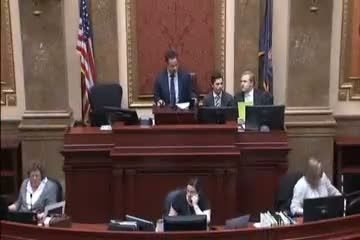
The Utah House on Feb. 28 passed House Bill 31 to address the rights of water users who receive municipal service outside a city’s boundaries. Representative Coleman, sponsor of HB31, said the bill is part of a three-bill package tied to a constitutional amendment (HJR1) and aims to reduce possible disenfranchisement and discrimination in rates for outside users.
Coleman said the measure allows municipalities to designate a service area rather than treating extra-jurisdictional water users as outside their jurisdiction, creates an advisory board, requires accessible maps so customers know their water sources, and triggers due-process protections if municipalities revoke service or change terms. He said some service contracts can be revoked with as little as 30 days’ notice and that HB31 improves notice and rate-setting participation for those customers.
Colleagues described the bill as a collaborative, consensus product of an interim water task force and urged support ahead of a related constitutional amendment. Representative Stratton characterized the bill as a practical codified response that pairs with HJR1. After floor discussion and a summation waiver, the House passed HB31 by a 70-0 vote and will transmit the bill to the Senate for further consideration.
Supporters emphasized equity, improved data and stronger voice for extra-jurisdictional water users; questions on scope clarified that HB31 applies to municipal water service districts only and does not change rules for nonmunicipal water service areas.