Get Full Government Meeting Transcripts, Videos, & Alerts Forever!
Get email alerts on the Firearms Procedure topic
No spam. Unsubscribe anytime.
Utah House approves measure allowing concealed carry for people with protective orders after permit application
Summary
The House passed House Bill 243 on March 4, 2019, allowing people who have filed for a protective order to carry a concealed firearm while they complete the process of getting a concealed-carry permit; a proposed substitute to create an expedited permit tied to ex parte orders failed on the floor.
The Utah House of Representatives on March 4 approved House Bill 243, a measure that allows a person who has filed a protective order to carry a concealed firearm while they pursue the state's concealed-weapons permit process.
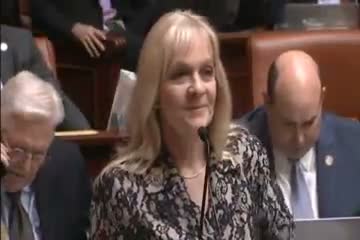
Representative Mark Watkins, sponsor of the bill, told the chamber the change "doesn't change who can carry a firearm for self defense" or "where" someone can carry; it instead allows a person who has filed a protective order to cover a firearm with a jacket or blouse while they work to obtain a permit. "This bill is a pro-choice bill," Watkins said, adding that "every woman should be able to choose" how to protect herself.
Representative Stoddard offered Substitute No. 1, which would have created an expedited permit pathway tied to the filing of an ex parte protective order and required permit training before a person could carry concealed. Stoddard argued the substitute "substantially decreases the time" to obtain a permit and "would get them the training that they require." He cited BCI staff statements that an in-person expedited background check could be completed in 20–30 minutes and remote processing returned within a week.
Supporters of the underlying bill, including Representative Karianne Lisonbee, said the change does not expand where people may carry and provides discretion for those who feel unsafe while awaiting a permit. Opponents raised cost and policy concerns; Watkins said additional administrative costs would be required for the expedited process. The House voted on the motion to adopt Substitute No. 1 and the motion failed. The chamber then voted to pass House Bill 243 as presented, 58 yes to 16 no; the bill will be transmitted to the Senate.
The floor debate included repeated references to protective-order procedure and law-enforcement background checks, and at least one factual claim about domestic violence risk tied to firearms: "Once a firearm is introduced into a domestic violence situation, the victim is 500 percent more likely to die," Representative Stoddard said during his summation. That statistic was presented as part of an argument for keeping training and background checks in place; the claim was not sourced on the floor and remained an assertion in debate.
Next steps: House Bill 243 will be sent to the Senate for consideration. No Senate action was recorded in the morning session transcript.