Get Full Government Meeting Transcripts, Videos, & Alerts Forever!
Get email alerts on the Consumer Protection topic
No spam. Unsubscribe anytime.
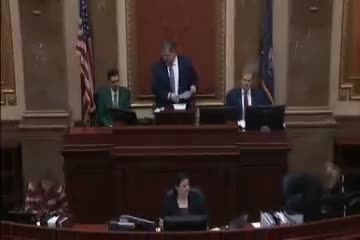
House amends and passes consumer-ticket-protection bill, requiring resellers to disclose status and fees
Summary
The House passed an amended HB128 on Feb. 19, 2019, requiring secondary ticket sellers to conspicuously disclose reseller status and to itemize total charges at checkout; amendment No.1 removed a rebuttable presumption and replaced it with a court-determinative process. (House vote: 52–18)
Representative Handy introduced first substitute HB128 to address deceptive secondary ticket websites and require clear disclosure that a site is a reseller and that ticket price may exceed face value, plus an itemized total at checkout.
Representative McCall moved Amendment No.1 to remove a rebuttable presumption (a provision Handy’s bill included) and replace it with a requirement that a presiding court determine the listed factors after full consideration; McCall argued the change protects legitimate businesses from being shut down on presumption alone. Handy agreed the change addressed concerns raised by stakeholders, including large platforms and local venues, and recommended adoption. The House adopted Amendment No.1.
Members then debated domain-name restrictions and whether the bill could be used to restrict legitimate competing sellers; Representative Brammer asked whether using an event name in a domain could be actionable, and Handy said naming an event StubHub would not automatically bar operation.
After summation, the House passed the amended bill 52–18 and sent it to the Senate for consideration. Sponsors and supporting venue operators said they would monitor the law’s effectiveness and return with refinements if evasion became common.