Get Full Government Meeting Transcripts, Videos, & Alerts Forever!
Get email alerts on the Traffic Safety topic
No spam. Unsubscribe anytime.
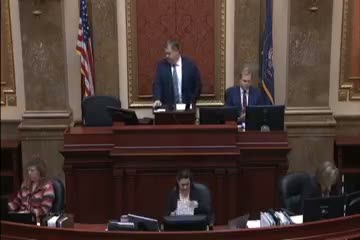
House approves limited motorcycle 'lane filtering' on roads under 50 mph
Summary
The House passed HB149 on Feb. 19, 2019, allowing motorcycles to filter between stopped vehicles on roads with speed limits under 50 mph and with a maximum speed differential; supporters cited Department of Public Safety and UC Berkeley data while opponents warned of insurance and safety risks. (House vote: 54–12)
Representative Brooks, sponsor of House Bill 149, told the House the proposal is narrowly tailored to allow motorcycles "to utilize the lane between stopped traffic" in downtown or slow-speed situations and stressed the bill was designed around safety guidance from the Department of Public Safety and academic research. "This bill, I think the best way to describe it is to tell you what it is not," Brooks said, emphasizing the measure was not intended to permit high-speed lane splitting on freeways.
Supporters argued the practice, when limited to roads posted under 50 miles per hour and with minimal speed differentials, reduces rear-end crashes and fatalities. Brooks cited National Highway Traffic Safety Administration guidance and UC Berkeley findings suggesting lane filtering in slow or stopped traffic can lower crash frequency.
Opponents raised liability and practical-safety concerns. A member who identified himself as opposing the bill said the policy "is just in a gray area that's going to cause us a lot of issues with insurance," and described personal experience with near-misses in California. Other questioners sought clarification about right-of-way at intersections and the difference between lane filtering (allowed under the bill at stopped traffic) and lane splitting (moving through moving traffic), which Brooks said the bill specifically excludes.
After discussion and a sponsor summation reiterating the safety data and the bill’s restrictions, the House opened and closed the vote; first substitute HB149 passed the House 54–12 and was forwarded to the Senate for consideration.
The next step is Senate consideration; the bill’s text places speed and speed-differential limits on the practice and ties implementation to the Department of Public Safety’s research.