Get Full Government Meeting Transcripts, Videos, & Alerts Forever!
Get email alerts on the Education Teacher Retention topic
No spam. Unsubscribe anytime.
House approves bill to create statewide teacher exit survey, sponsors say low-cost data can guide retention policy
Summary
The House passed HB130 to require the State Board of Education to develop a model exit survey for teachers, backed by lawmakers as a low-cost way to gather data on why educators leave; the bill passed 48-24 and now goes to the Senate.
Representative Carol Moss, the sponsor, told the House HB130 aims to produce reliable, statewide data about why teachers leave the profession and to inform policy responses. "You can't manage what you don't measure," Moss said, arguing the survey would cost about $8,000 to develop with $3,000 ongoing.
Supporters said the bill offers a modest investment to better target retention efforts. Representative Briscoe, a former educator, told the chamber the Salt Lake City School District retains 74 percent of teachers after five years because of an intensive peer-assistance program and said a uniform survey would give comparable, actionable data. "By doing it in one fell swoop for a few thousand dollars, we can get some excellent data," Briscoe said.
Opponents cautioned the House against encroaching on the State Board of Education's constitutional authority. Representative Thurston questioned whether the Legislature should prescribe human resources processes and suggested the state board could accomplish the work if funded: "If it's a question of $8,000, let's have somebody request an appropriation and see if we can get that approved," Thurston said. Thurston said he would vote against the bill because he worried it would micromanage the board's role.
Sponsor Moss said the state board has discussed a survey but lacked dedicated funding or a staff person, and the bill would ensure a model survey is available to local education agencies (LEAs) while allowing districts to adapt it. When asked whether other states provide comparable models, Moss said she did not have that information but noted the state board and superintendent support the proposal.
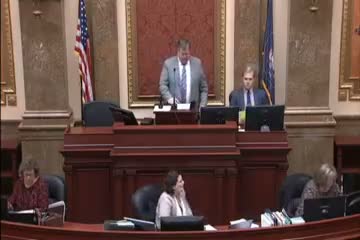
After floor debate and a short summation by Moss, the House voted: HB130 received 48 yes votes and 24 no votes and passed the House. The bill will be transmitted to the Senate for consideration.
Next steps: HB130 moves to the Utah Senate for its committee and floor consideration.