Get Full Government Meeting Transcripts, Videos, & Alerts Forever!
Get email alerts on the Indigent Defense topic
No spam. Unsubscribe anytime.
Indigent appellate defense bill passes after debate over scope and government expansion
Summary
Senate Bill 139, creating an indigent appellate defense office for smaller counties, passed the House after extended debate about whether it expands state obligations into civil matters; supporters cited constitutional obligations and case law, opponents warned it would "grow government." Final House tally: 47-23.
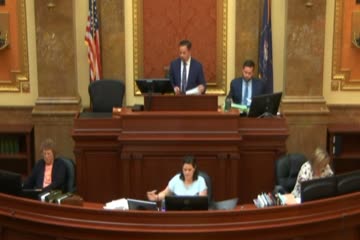
The Utah House passed Senate Bill 139 on March 10 after extended floor debate about the scope and future growth of indigent defense services. Sponsor Representative Ferri described the bill as creating an indigent appellate defense division under the Office of Indigent Defense Services to provide appellate representation for Utahs smaller (third- through sixth-class) counties, noting that many of those counties lack appellate representation.
Opponents argued the bill expands state responsibility beyond trial-level criminal defense and could extend to certain civil matters; one Representative (appearing in the transcript as the member who spoke from SEG 763) called the bill a "textbook example of how to grow government," and criticized provisions that the speaker said could fund counsel in private adoption cases and other civil matters. Supporters replied that the state has constitutional obligations and that case law supports appellate counsel in certain contexts; Representative King cited Evarts v. Lucy and related precedent as support for appellate counsel access.
Representative Ferri moved Amendment 2 clarifying exclusions (including cases involving aggregate aggravated murder appeals) and argued the bill would centralize appellate defense for counties that cannot afford adequate representation. After debate and summations, the House recorded passage for the substitute SB139: "for substitute Senate Bill 139, passes the House with 47 yes votes and 23 no votes." The bill will be returned to the Senate for further consideration.
Floor discussion focused on the policy trade-offs between centralized statewide services and county-level responsibility, constitutional and case-law interpretations of the right to counsel on appeal, and whether the bills language could be read to provide representation in some non-criminal contexts. The transcript includes specific claims and rebuttals on those points; the amendment and sponsor responses clarify that the bill is intended to address appellate representation gaps in small counties.