Get Full Government Meeting Transcripts, Videos, & Alerts Forever!
Get email alerts on the Higher Education topic
No spam. Unsubscribe anytime.
House approves bill to unify Utah's higher-education systems into single governing structure
Summary
The House passed first substitute S.B. 111 to combine Utah's two higher-education systems under a unified board, create industry advisory councils, and promote credit transfer and efficiency; sponsor and supporters said students will be primary beneficiaries; vote was 72'yea, 1'nay.
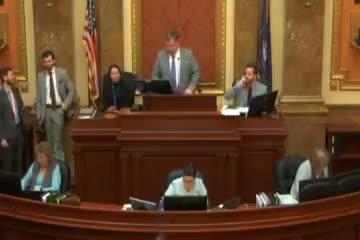
Speaker Wilson introduced first substitute S.B. 111 on March 4, calling it “one of the most important things we've done for our post secondary education system in the state of Utah in probably 5 decades.” The bill would combine the state's two separate higher-education systems (two- and four-year UHI institutions and eight UTech institutions) under a single governing board, establish industry advisory councils, and set common goals and metrics for program approval and articulation.
Supporters emphasized student outcomes and administrative efficiency. Representative Bauer said the bill helps align K–20 goals, requires institutional leaders and education committee chairs to meet quarterly, and brings employer input into apprenticeships and internships. “This really brings them together,” Bauer said, calling the measure “innovative” and “timely for the state of Utah.” Representative Johnson, a superintendent, said the unified system could clarify pathways for students and families and called it potentially historic for Utah students.
Sponsor Wilson described the proposed nominating committee for board appointments as a guardrail on unilateral gubernatorial appointments, saying the committee will include House and Senate representatives to vet candidates before the governor selects appointees. He also said the unified board will include students and members at large and that metrics will protect technical and certificate programs from being subsumed by larger four-year campuses.
Lawmakers raised procedural and policy questions during floor debate. Representative Perry asked whether language allowing the governor to request additional nominees if "not satisfied" could be softened to avoid perceived political interference; Wilson said the provision had been negotiated with stakeholders, including the governor's office, and preferred to leave it in place. Representative Shurtleff and others asked whether the bill would improve credit transfer; Wilson said seamless articulation and stackable credentials are explicit objectives but acknowledged the changes will take time to implement.
After debate and sponsor summation, the House opened and closed a roll call on the bill. First substitute S.B. 111 passed the House with a recorded vote of 72 yea and 1 nay and was returned to the Senate for further consideration.
The next procedural step is Senate consideration of the House'passed substitute and any follow-up committee work; the bill's implementation will require development of the nominating committee process, metrics, and transitional rules to govern existing trustees and campuses.