Get Full Government Meeting Transcripts, Videos, & Alerts Forever!
Get email alerts on the Inland Port topic
No spam. Unsubscribe anytime.
House approves substitute inland port bill adding local appointments and environmental limits
Summary
The House passed a substituted Inland Port bill that adds municipal appointments to the Inland Port board, returns final land‑use authority to municipalities, and restricts use of tax increment financing for projects that fail to meet minimum environmental standards. The bill passed 65–6.
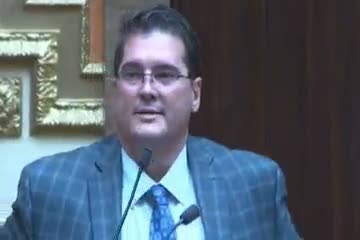
Representative Derek Gibson, sponsor of the substitute to House Bill 347, told the House the bill changes board representation and financial allocations tied to the Inland Port and adds minimum environmental standards to limit use of tax increment financing. “The Inland Port may not use any of its tax increment money on projects that do not meet at least the minimal environmental standards as set forth by the board,” Gibson said on the floor.
Gibson described three principal changes: giving the Salt Lake City mayor and the Magna Township mayor appointments to the Inland Port Board, adding a director with global trade experience, and returning final land‑use authority to the local municipality. He said 25% of tax‑increment revenue that would have gone to the Inland Port will instead be allocated to municipalities and taxing entities, with the Inland Port retaining 75%.
Representative Daley‑Provost commended Gibson’s outreach to stakeholders and said the environmental standard language made the bill supportable in districts where the Inland Port had been unpopular. Representative Briscoe asked about an extended section of code referencing a non‑lapsing appropriation; Gibson explained the language preserves non‑lapsing revenue rollovers rather than drawing new revenue.
After floor discussion and brief questions, the House substituted and approved the measure. Voting closed with the substitute passing the House 65–6; the bill will be transmitted to the Senate for consideration.
The House returned several other bills to the third‑reading calendar after committee reports and continued the day's business before adjourning. The bill’s next steps are transmittal to the Senate and any further Senate consideration requested by that body.