Get Full Government Meeting Transcripts, Videos, & Alerts Forever!
Get email alerts on the Daylight Saving Time topic
No spam. Unsubscribe anytime.
Utah House backs bill to make daylight saving time permanent if Congress and nearby states agree
Summary
The House passed Senate Bill 59 to shift Utah to permanent daylight saving time, contingent on federal authorization and at least four other Western states making the same change. Lawmakers debated health impacts, regional coordination and an offered substitute to stay on permanent standard time.
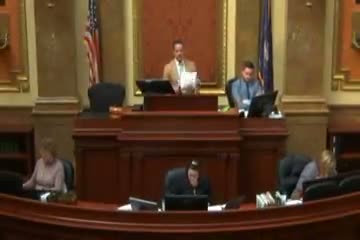
The Utah House on Feb. 26 passed Senate Bill 59, a measure that would put the state on permanent daylight saving time if two conditions are met: Congress authorizes the change and at least four other Western states adopt the same shift.
Sponsor Representative Ward framed the bill as following national momentum and constituent preference for stopping the twice-yearly clock changes. He argued the change should happen as part of a regional block so Utah is not left out of sync with neighboring states. "It is time for a fall without a fallback and for a spring without a spring forward," Ward said during his summation.
The measure drew a lengthy floor debate. Representative Spendlove offered a first-substitute that would instead set Utah on year-round standard time; he framed the substitute as giving another option to "runners" and "gamers," saying it accommodates constituents who prefer earlier morning light. "There are two kinds of people. They're runners and they're gamers," Spendlove said while explaining the substitute.
Representative Judkins opposed the substitute, urging lawmakers to prioritize stopping the clock changes over which permanent schedule is adopted. He cited constituents, including parents of children with special needs, and said the underlying goal is to end the biannual shift because it harms physical and mental health.
Other lawmakers raised regional coordination and practical considerations. Representative Thurston and others noted that remaining aligned with neighboring states and seeking federal permission are central features of the bill. In response to a question on contingency, Ward confirmed the statute would include a future effective date contingent on federal action and the adoption by other Western states: "This is a bill, not a resolution. It just has a future effective contingent date," he said.
The House considered and defeated the substitute and then approved SB 59 by roll-call. The clerk announced the final tally: SB 59 passes the House with 70 yes votes and 1 no vote. The bill will be signed by the speaker and returned to the Senate for the president’s signature.
What happens next: SB 59’s effective change remains contingent on federal law and the actions of other states; the bill as passed creates a mechanism for Utah to move to permanent daylight saving time if the specified conditions occur. The House recessed after completing its business for the day.
Sources: Floor debate and roll-call announcements on the House floor, Feb. 26, 2020.