Get Full Government Meeting Transcripts, Videos, & Alerts Forever!
Get email alerts on the Towing Signage topic
No spam. Unsubscribe anytime.
Utah House approves towing‑signage rules after heated floor debate
Summary
The House passed House Bill 57, setting statewide uniform towing‑warning signage and post‑towing procedures for private parking lots. Supporters said clearer signs will reduce confusion; critics warned the measure authorizes patrol‑style towing and is a disproportionate remedy for parking infractions.
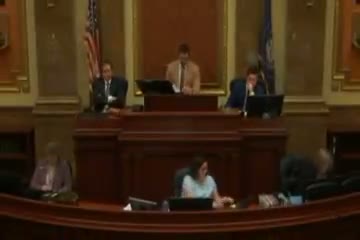
House Bill 57, a measure to standardize towing‑warning signage on private parking lots across Utah, passed the House of Representatives 40–26 after an extended floor debate on Feb. 6–7, 2020.
Representative Ursula Maloy, the bill sponsor, said the measure aims to reduce traumatic, confusing towing events by requiring property owners to post uniform warning signs and to provide clear contact information so vehicle owners can locate and recover towed cars quickly. “The goal is to make it easier for people to park and know what the rules are in private parking lots, and, if they are towed, to be able to get their car back as quickly as possible,” Malloy said.
The debate drew sustained criticism from Representative Nelson, who called the bill a disproportionate response to minor parking infractions and warned it could enable predatory towing. Nelson argued the bill authorizes towing companies to patrol lots and haul cars for simple parking violations rather than relying on notice or lesser remedies. “This is a disproportionate punishment for a minor violation,” Nelson said, adding that the bill risks leaving drivers without an easy way to find their vehicle after it is taken.
Supporters, including Representative Ballard, said the bill balances property owners’ rights with consumer protections by standardizing signage and requiring retrieval information. Representative Kristofferson and Representative Brammer questioned whether the measure would apply to residential driveways and sought clarity on notice requirements; the sponsor said the bill does not apply to single‑family residences and pointed to existing ordinances and statutes that address residential parking. Malloy also noted a statutory requirement that a towed vehicle be made available within one hour of contact with the tow company and cited a retrieval fee example ($24.07) as part of existing practice.
Under the bill, property owners who opt not to erect the required signs may still have the option to tow but would have to provide 24 hours’ notice before doing so in certain circumstances; the bill also requires signage to display the tow company’s phone number and directs that towed vehicles be recorded on a searchable state database so owners can locate their vehicles.
Representatives who supported the bill argued it will reduce confusion for ordinary drivers (including those juggling parenting or errands) and give them immediate ways to find and recover towed vehicles. Opponents said signage alone will not eliminate the problem of predatory towing and raised equity concerns for people who lack the means to quickly retrieve a vehicle.
The House voted 40 yes, 26 no, to pass HB 57; the measure will be transmitted to the Senate for further consideration. The debate highlighted lingering disagreements over private‑property towing authority, notice requirements and how best to protect consumers while preserving property owners’ enforcement tools.