Get Full Government Meeting Transcripts, Videos, & Alerts Forever!
Get email alerts on the Elections topic
No spam. Unsubscribe anytime.
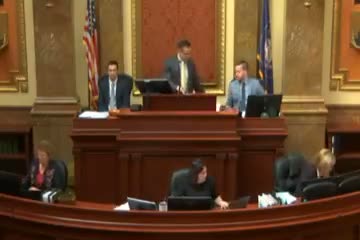
Utah House sets state procedure for filling congressional vacancies; legislature to recommend interim U.S. Senate nominees
Summary
The House passed first substitute HB 17, establishing state procedures for special elections to fill congressional vacancies and allowing the legislature to recommend three names for a temporary U.S. Senate appointment; the measure passed 58–16.
Representative Nelson urged passage of first substitute House Bill 17 on Monday, saying the bill fills a gap in state law by prescribing the time, place and manner for special elections when a U.S. House or Senate seat becomes vacant. Nelson cited the 2017 resignation of Rep. Jason Chaffetz as an example of prior conflict between the governor and legislature over replacement procedures and said HB 17 imports regular-election timing and candidate-selection methods into the special-election context, including a governor proclamation within seven days and a roughly 90-day window for parties or signatures to place candidates on the ballot.
The substitute also adds a temporary appointment mechanism for U.S. Senate vacancies: the legislature would recommend three nominees and the governor would make a temporary appointment from that list. "The governor still makes the appointment as provided in the Seventeenth Amendment," Nelson said; "we're merely recommending and it's merely temporary." Nelson framed the change as a collaborative product of last summer's negotiations among the House, Senate, governor and lieutenant governor.
Opponents warned that vesting nomination authority in a legislative process could invite partisan influence. Representative Arendt said central-party committees had historically provided nominees and cautioned that a legislative selection could leave the minority underrepresented: "When you have situations where there is a significant partisan split between who controls the legislature and the office being vacated, I would submit to you that it's hard to avoid partisan considerations," Arendt said. Representative Kristofferson and others questioned whether the legislature could manage the nomination process without chaos given 75 members and diverse interests.
Nelson and supporters responded that the Legislative Management Committee is bipartisan and that the body would consult party organizations in vetting nominees. The sponsor and supporters also said a temporary appointment is rare and intended to ensure representation during urgent federal matters.
The House approved first substitute HB 17 by a vote of 58 yes to 16 no. The bill will be transmitted to the Senate.