Get Full Government Meeting Transcripts, Videos, & Alerts Forever!
Get email alerts on the Public Health Economic Commission topic
No spam. Unsubscribe anytime.
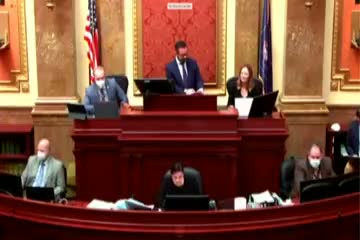
House approves creation of Public Health and Economic Emergency Commission to advise governor on reopening
Summary
The House passed SB 3,004 to create a 10-member commission charged with producing a plan by April 22 to move Utah down one COVID-19 risk level; the commission will set guidance levels and advise the governor, who must publicly explain any deviations by April 30.
The Utah House passed second substitute Senate Bill 3,004 on April 16 to create a Public Health and Economic Emergency Commission that will advise the governor on balancing health and economic concerns during the COVID-19 pandemic.
Representative Rex Shultz, the House sponsor, said the commission will identify economic and health guidance levels — a green/yellow/orange/red framework — and present a plan on or before April 22 that would move the state one step down from the highest risk level. "This commission's duties shall be to advise and make recommendations to the governor regarding the state's response to the COVID-19 emergency," Schultz said in his presentation.
Why it matters: The commission is charged to produce actionable guidance rapidly; the governor must issue a public statement by April 30 if he chooses not to implement the commission's plan and explain the data relied upon. That timing — and the commission's authority to recommend targeted, geographically differentiated steps such as when elective surgeries or restaurants may resume — was central to floor debate.
What the bill does: SB 3,004 establishes a 10-member panel that includes the Department of Health executive director (or designee); four governor appointees including chief executives of hospital-operating health systems; two senate appointees; two house appointees; and one appointee from the Utah Association of Counties. The commission is to identify risk levels, recommend social and economic activities for each level, and craft a plan for moving from one level to the next.
Floor debate and concerns: Legislators raised questions about speed, transparency and composition. Representative Thurston and others asked whether the April 22 plan would be preliminary or comprehensive; Schultz told the House the April 22 deliverable is intended to move the state from "red to orange" and that later plans could address subsequent steps. Several members urged adding a practicing physician and more business or rural representation. Representative Carol Moss said the presence of clinicians such as Dr. Angela Dunn on existing task forces has given public confidence; Representative Gibson responded that hospital CEOs consult medical directors and that physician perspectives would be available through appointed members.
Other issues included whether the commission would duplicate the governor's Coronavirus Task Force and whether it was subject to Utah's open-meetings law. Representative 22 raised concerns about the commission not being subject to the Open and Public Meetings Act; Schultz said the bill is consistent with emergency provisions and that the commission is intended to complement — not replace — existing task forces. Representative Doth moved to end debate, but the previous-question motion failed; later the House called the question and passed the bill 59–15.
What happens next: Because the bill takes effect immediately if adopted by a two-thirds vote and signed, sponsors said appointments could be made quickly and the commission could convene over the weekend. The commission is charged to coordinate with local officials, propose testing strategies, and identify targeted measures for geographic areas and vulnerable populations.
Representative Schultz said the legislature will remain able to change the statutory framework in future special sessions if adjustments are necessary. "We owe it to the citizens of this state to come up with a plan in a responsible way to move forward," he said.
Ending: SB 3,004 passed the House 59–15 and will be returned to the Senate for further consideration or enrollment. The sponsor and leadership signaled they would begin appointments immediately if the bill becomes law.