Get Full Government Meeting Transcripts, Videos, & Alerts Forever!
Get email alerts on the Driver License Policy topic
No spam. Unsubscribe anytime.
House passes bill limiting license suspensions for non-moving debts, 71-1
Summary
The Utah House passed HB143 to prevent suspension of driver's licenses for failure to pay government fees or non-moving debts while allowing suspension for failure to appear in moving violation cases; the bill passed 71-1 and will go to the Senate.
The Utah House on Feb. 1, 2021, passed House Bill 143, a measure aimed at limiting when courts or the Division of Motor Vehicles may suspend an individual's driver's license for government-owed debts or administrative obligations.
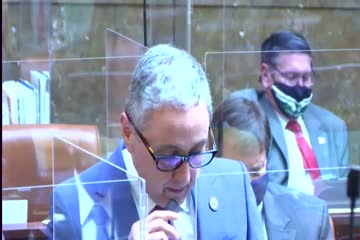
Representative Malloy, who brought the measure to the floor, said the bill prevents courts from suspending a driver's license for failure to pay a penalty account receivable or other types of non-moving government debt. Malloy said the change is intended to help Utahns keep their license to get to work or school and to avoid a cascade of problems that follow a suspension for matters unrelated to driving safety.
The bill preserves existing authority to suspend licenses for failure to appear on moving traffic violations and includes clarifications on when the division may suspend a license. Malloy told members the bill also gives people more time to address fees assessed in a court appearance.
There was no substantive debate recorded on the floor. Representative Malloy waived summation and voting was opened; the House recorded 71 yes votes and 1 no vote on final passage. The measure will be transmitted to the Senate for further consideration.
What to watch: The Senate committee process will review the bill's statutory language and any fiscal or implementation questions. The House sponsor characterized the bill as addressing a problem that affects thousands of Utahns whose ability to work or attend school may be impeded by license suspension for non-moving related debts.
Vote tally: 71 yes, 1 no.
Prognosis: The measure has clear bipartisan support in the House but will face standard Senate committee review.